
I’m heading back after a lovely Thanksgiving weekend with family and old friends. In a bit of downtime, I finished up Ambigrammia: Between Creation and Discovery by Douglas Hofstadter, and if you’ve been following my own linguistic curiosities with more interest than impatience, then I have to recommend this book as a Christmas gift or a purchase for yourself.
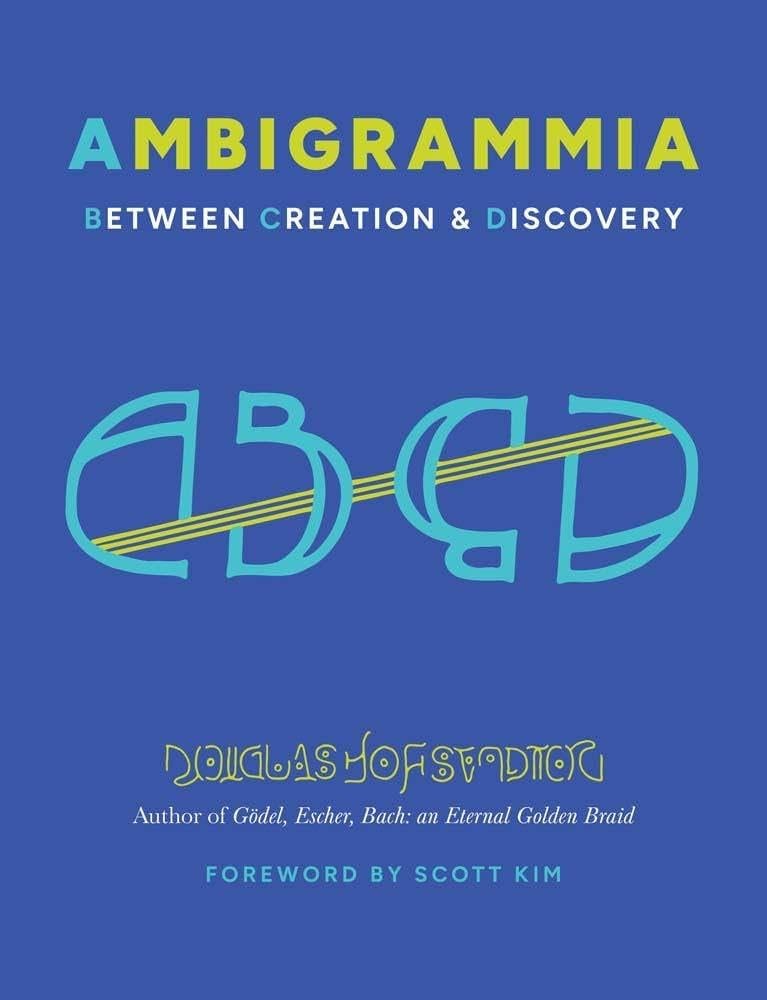
Ambigrammia (or ABCD, get it?) is one of the most thorough examinations of a wordplay type that I’ve ever read, leaving my own Or the Other and its predecessor Palindromes and Anagrams in the dust. But that’s not all it has to offer. The book is part memoir, part puzzle-box, part philosophical journey, and 100% Douglas Hofstadter. The brilliant, one-of-a-kind mind that once produced Gödel, Escher, Bach is very much alive on these pages.
I’ve discussed ambigrams often before, here and in The Journal of Wordplay. But just in case you’re just joining us, an ambigram is a word that can be read (at least) two ways. Many are designed to read the same when turned upside down, others when mirrored. Hofstadter is one of the acknowledged masters of this niche art form. And to him, it’s not just a neat trick but bound up with his larger insights into the world. And those insights tend to be joyful ones.
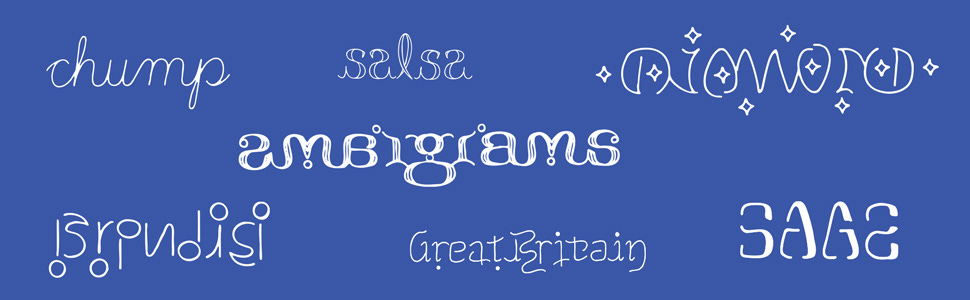
The book is all about ambigrams—the art of them, the logic behind them, the accidents, the inspirations, and especially the surprising little metaphysical questions they stir up. Hofstadter doesn’t just show off clever designs (though he shows plenty). He treats them as windows into how the human mind organizes patterns, symmetry, creativity, and meaning. At times he ventures beyond English and even beyond the conventional alphabet into kanji and Hebrew.
But he does it in this loose, conversational style that feels like he’s sitting at your kitchen table with a stack of doodles and saying, “Okay, look at this one. Now here’s why it matters.”
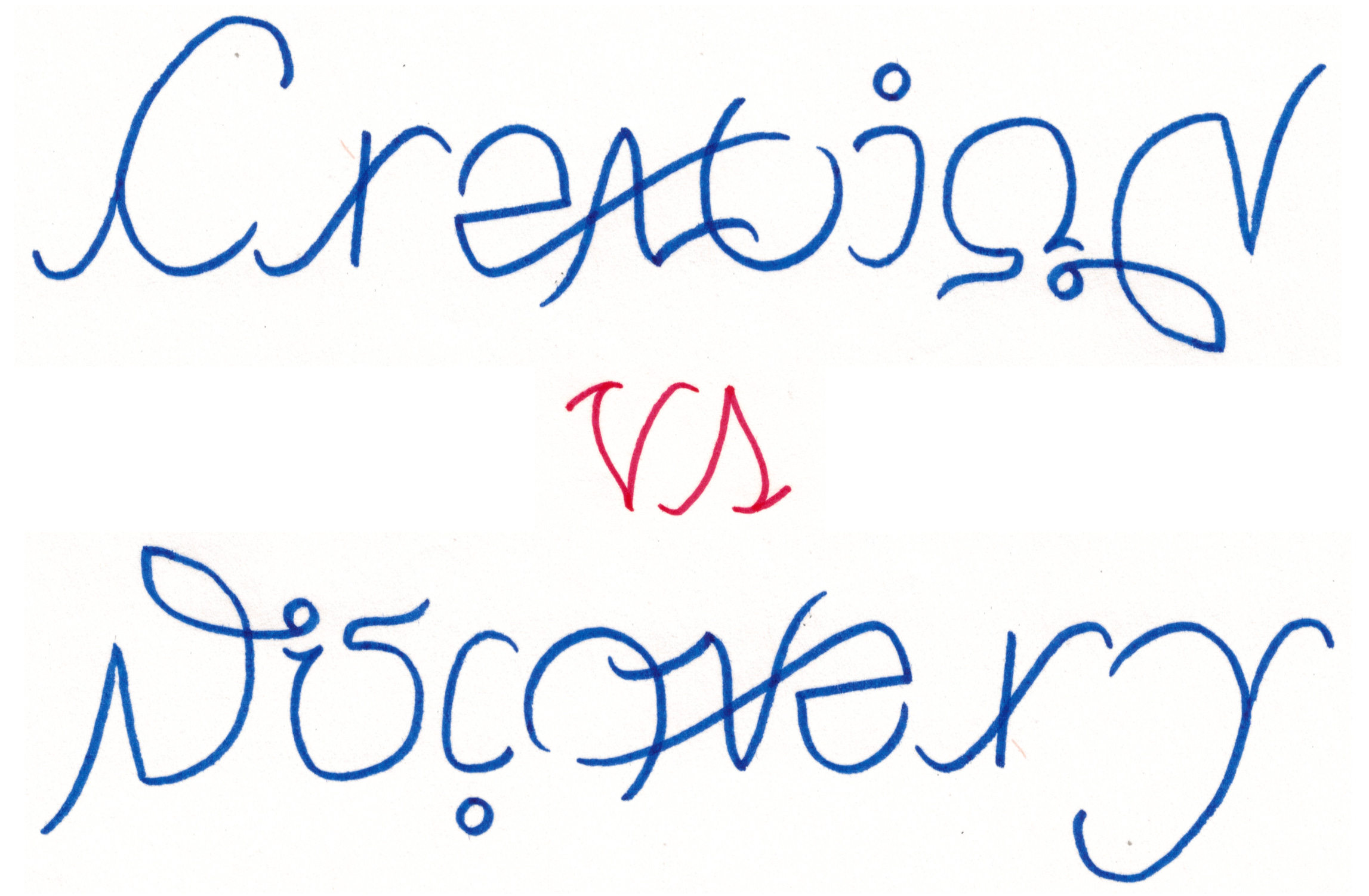
Are ambigrams something you invent, or are they something you notice already lurking in the structure of letters and the ways they can communicate meaning, even when bent and stretched? By the end, Hofstadter’s answer is basically: “Both, obviously—and isn’t that weird and wonderful?”
This is not a book to plow through in one go, not unless you can devote a weekend to it with no distractions. The prose wanders. A lot. Sometimes Hofstadter goes off on an autobiographical tangent about his travels; sometimes he breaks into little philosophical riffs about perception; sometimes he’s just nerding out about letterforms.
But that’s part of the charm. You don’t read Hofstadter expecting a straight line. You read him because his enthusiasm is infectious, and because he treats mental play as a serious topic. And as he is in his mid-eighties, it’s more than understandable that he wants to pass on everything he’s learned, focused and anchored through these hypnotic works of art.
When the book does wrap up, Hofstadter questions his own thesis a bit—in such disquieting times, are these goofy distractions really the best use of our brainpower? I don’t quite agree with his daughter’s statement in the book’s pages that “only art can save the world.” But I feel like only humanity can. And art—and even delight—are necessary parts of what makes us human. Hofstadter’s work offers plenty of both.
An excerpt from the book is available in The Atlantic here.
The timing of this post is uncanny. Yesterday, I read the Wall Street Journal's special section on holiday books from last weekend. It included reviews of two books that sounded fascinating: Matching Minds With Sondheim, by Barry Joseph and Hofstadter's Ambigrammia. And I thought to myself, "I wonder if T Campbell is aware of the latter?" and briefly thought of posting a comment here on you Substack. Then thought, "Nah, he'll already know." 😊