Dare to Be
A character study in scarlet.

Mark Waid’s Daredevil got me ready to be married.
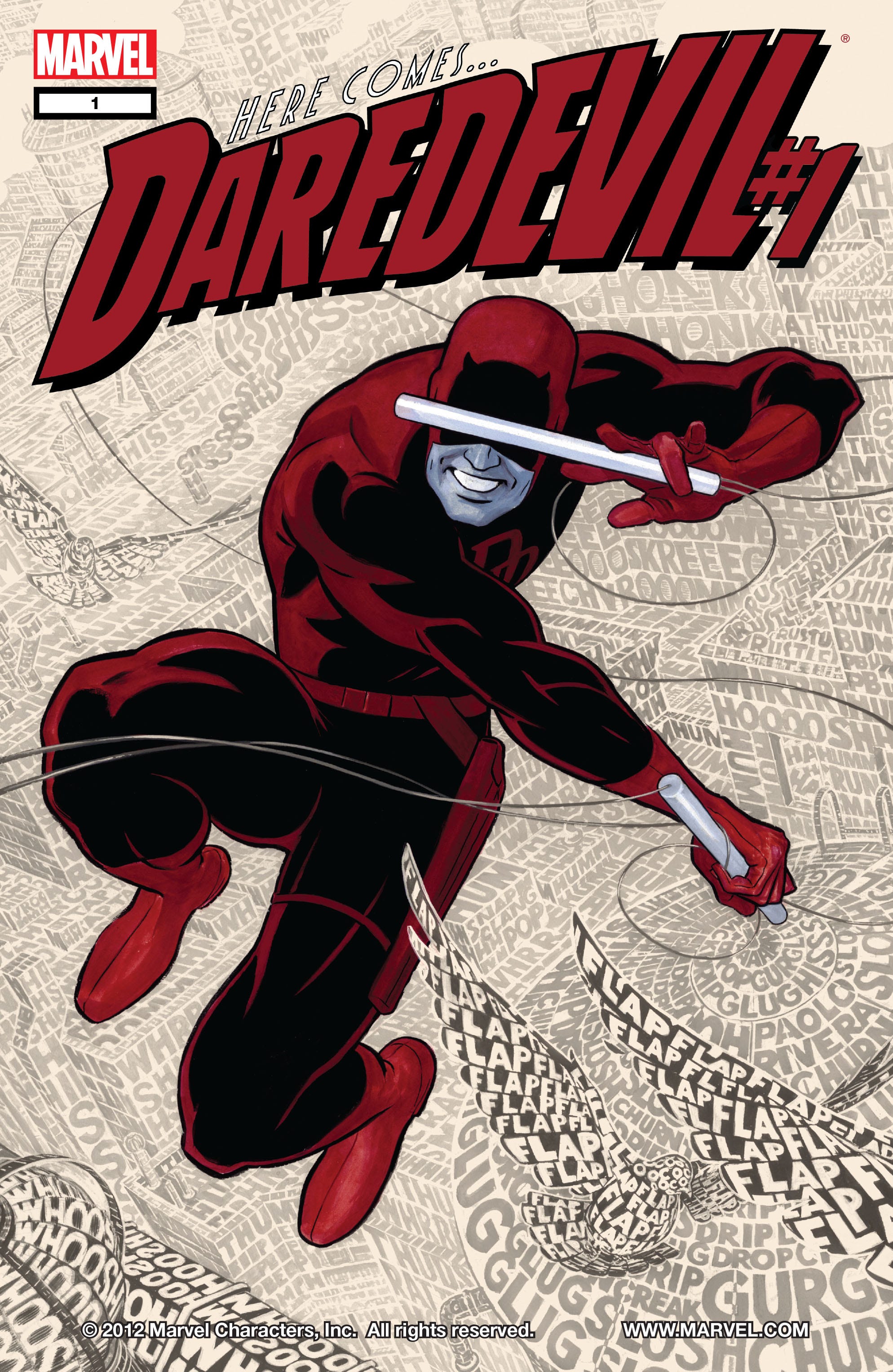
Despite his name, the title character’s adventures haven’t often been carefree affairs. Early Frank Miller’s stylish neo-noir became the default writing style for the character in the early 1980s, and that meant Daredevil’s life became a pathway strewn with despair and dead loved ones. No later writer had pulled away from that pattern for long… until 2011-2015, when Mark Waid took over the character for fifty-four issues.
As Waid came on, Daredevil was still in the midst of his latest crisis. He had been “outed” as criminal defense lawyer Matt Murdock—no one could quite prove it, but the public pretty much knew.
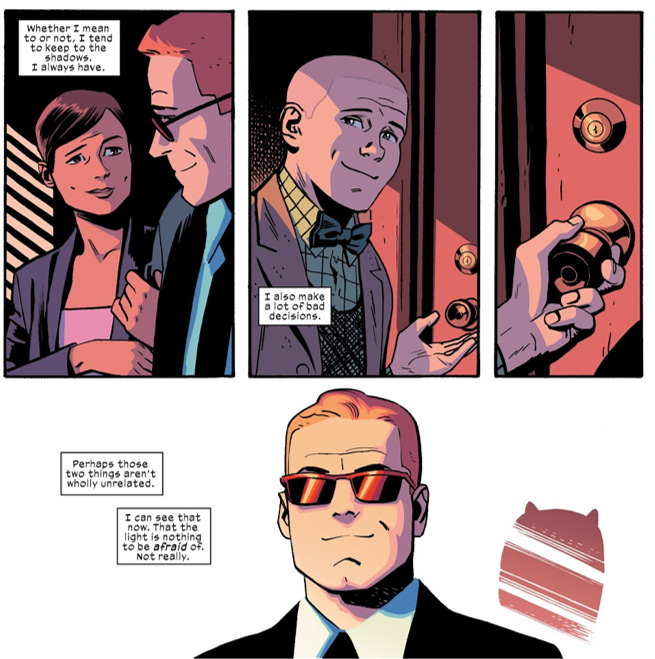
The superhero secret identity can be a metaphor for the divided lives we all live. Nobody’s quite the same with their spouses or lovers as with their parents or best friends or kids. But when we get too “divided,” it starts to feel like hiding out of shame. And if we’re going to share our lives with someone, we have to plan on letting them see all of who we are, not just the parts we like best.
Abraham Lincoln, a depressive who fought to be cheerful, once said: “Most people are about as happy as they make up their minds to be.” At the start of Waid’s run, Matt makes up his mind to be happy. He accepts that his secret identity will never again really be secret, and if he doesn’t want his long history of tragedy and trauma to consume him, he’s got to choose to move past it.
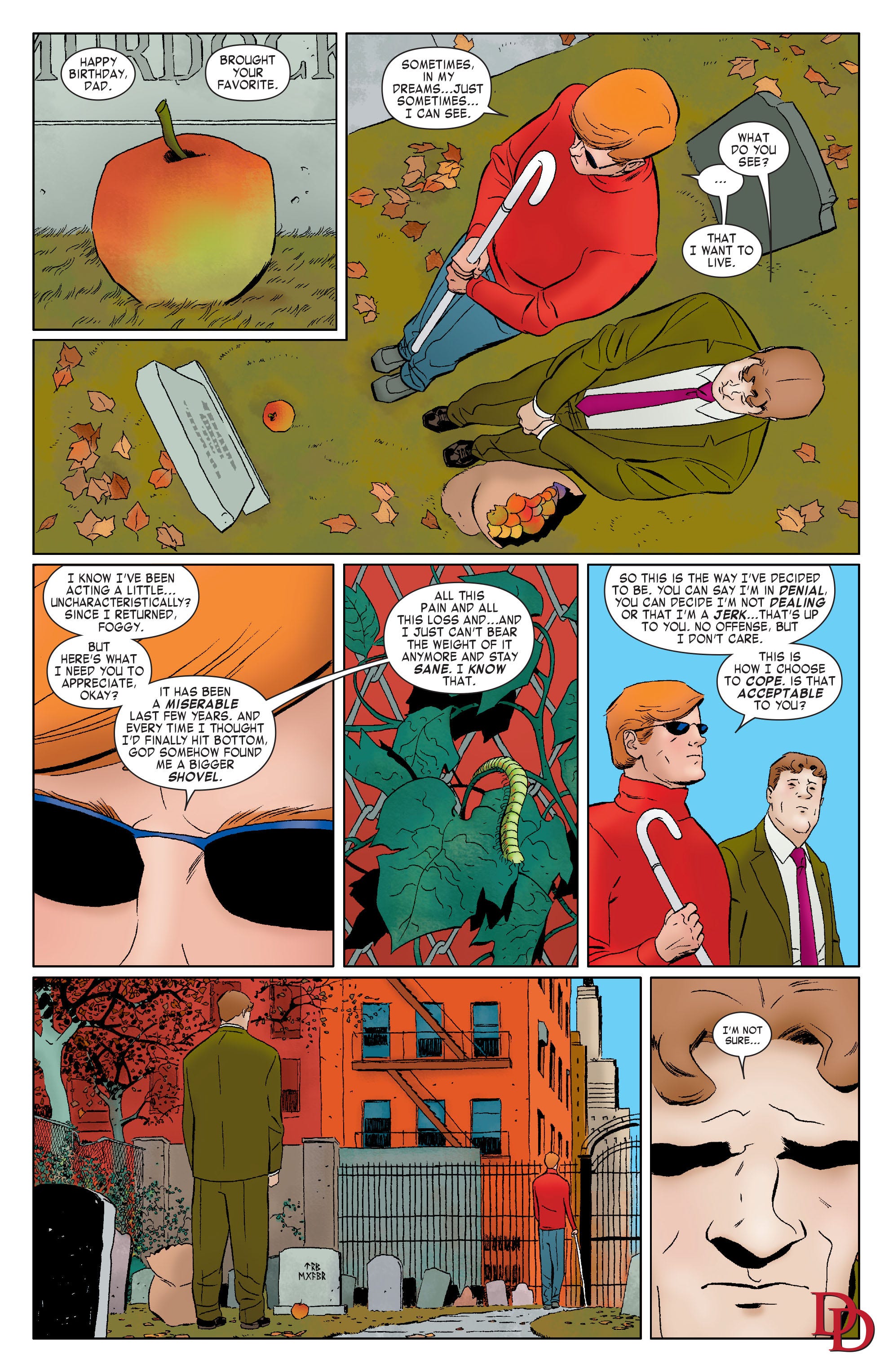
The stories that followed were full of lighthearted superhero action, but they also acknowledged over and over that being happy isn’t quite that easy. Trauma resurfaces when you least expect it. Your friends can grow frustrated when it looks like you’re doing badly. And they can worry about denial when it looks like you’re doing well.
At the end of Waid’s run, as Matt is about to embark on a tell-all book tour, he has a last-minute panic attack. Has trying to move past his personal history just condemned him to repeat it? Are his best friend Foggy and girlfriend Kirsten doomed to suffer the same kind of early, messy demise as so many others his life has touched?
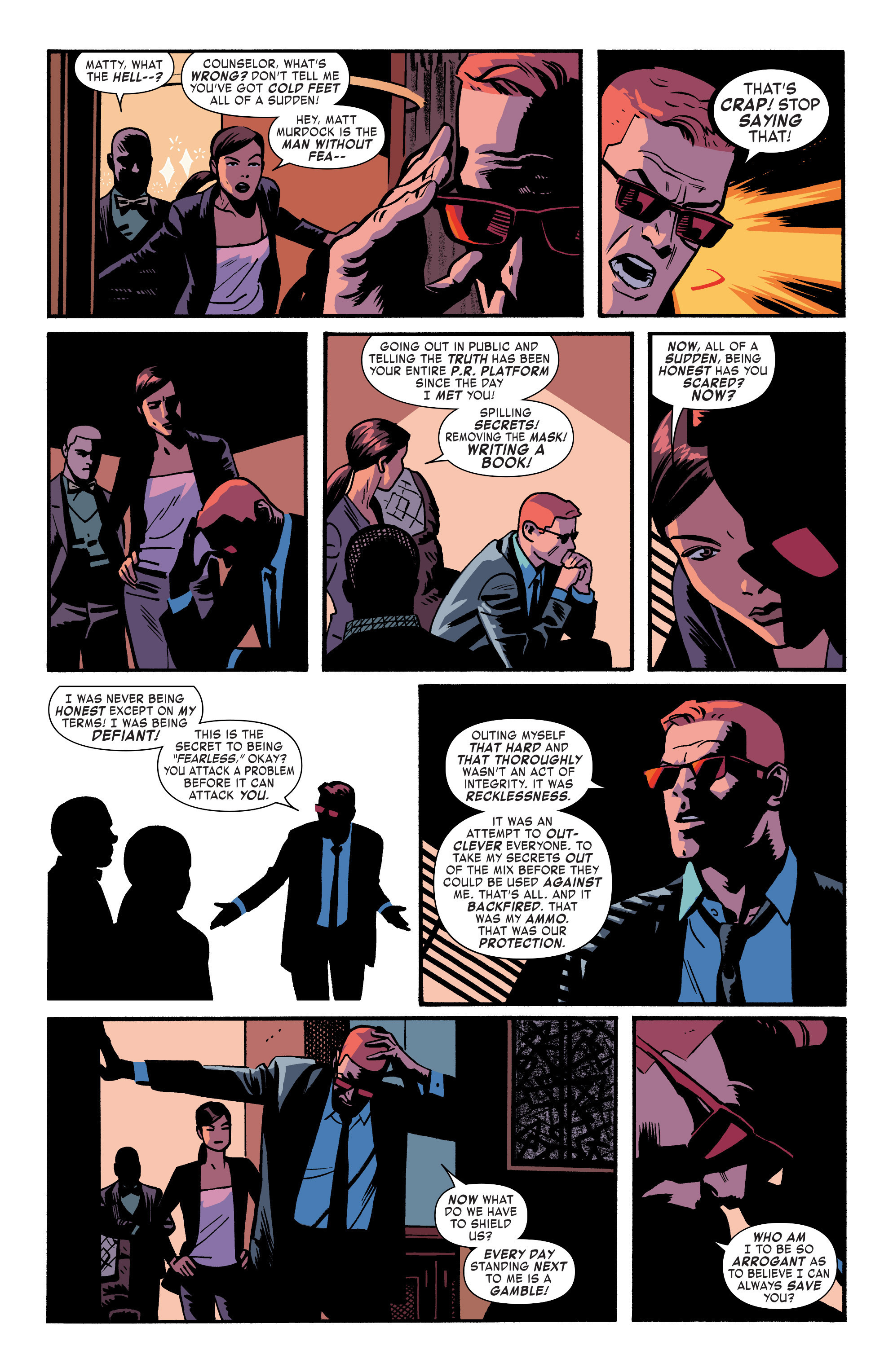
Foggy pulls Matt out of it, partly by working the Catholic guilt that sometimes reinforces Matt’s blacker moods: “You don’t keep secrets to shield anyone but you. You think it’s okay because you’ve convinced yourself that keeping secrets is a brave and noble act. Stop thinking that. It’s not true.”
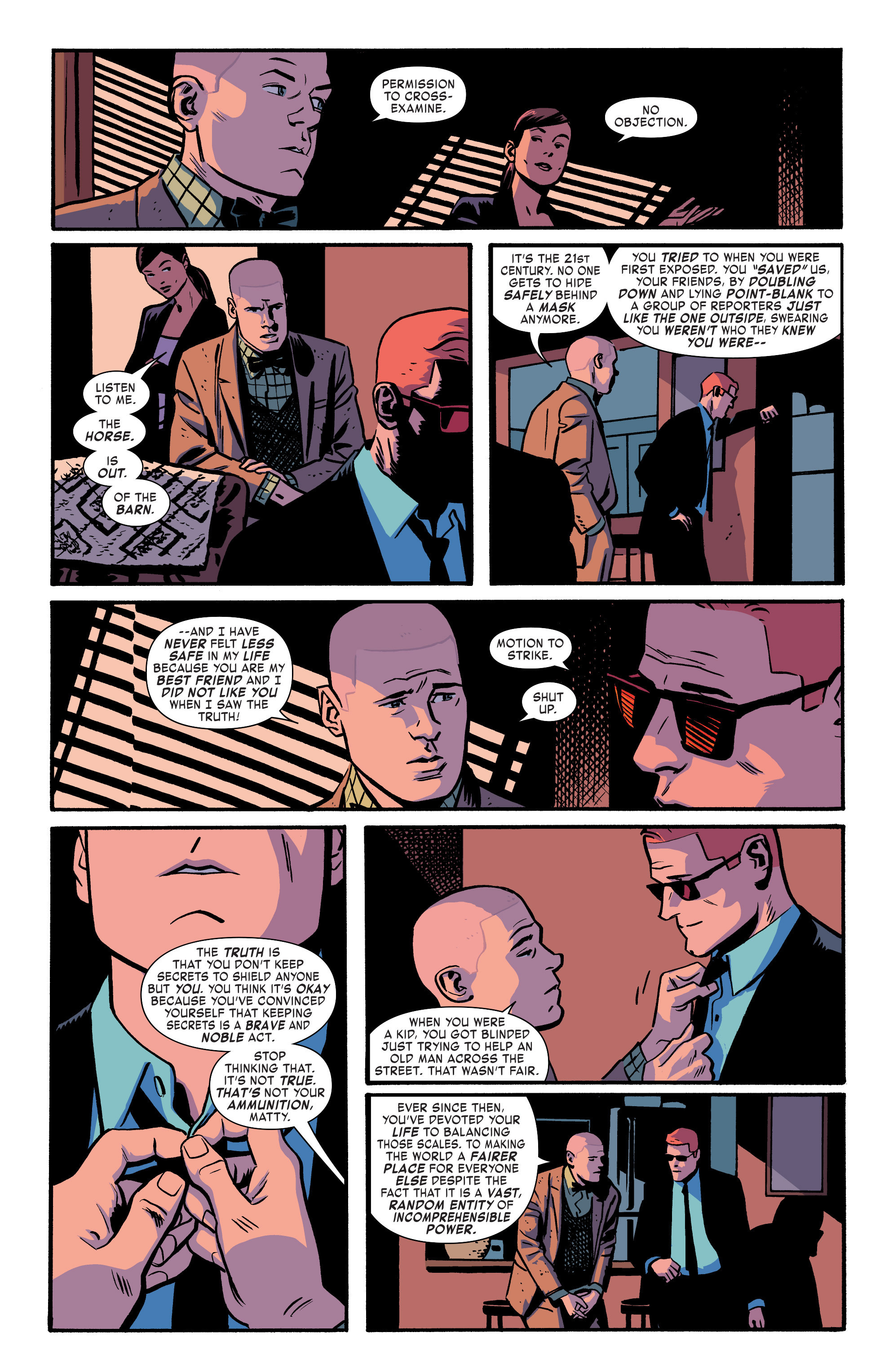
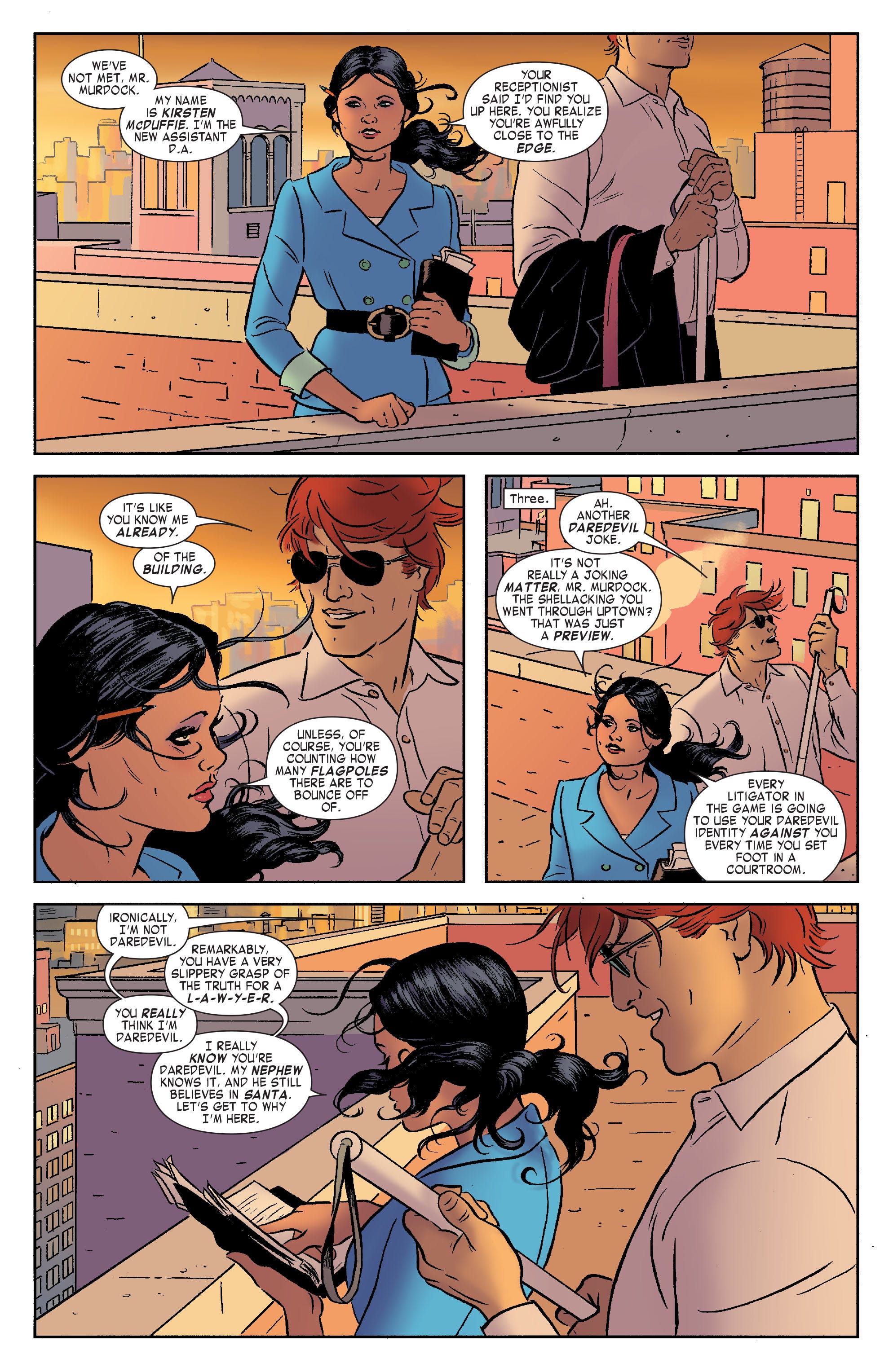
Kirsten, who saw through Matt’s “I’m not Daredevil” routine the first day they met, usually likes to spice her supportiveness with sass. But this time, she yields the floor to Foggy, because some things need to be said sincerely.
I knew that change in comics was constant. And it often looped back in on itself. Heroes died and came back to life, quit the hero business and then unquit it, got older and then got younger, their personal histories rewritten or unwritten.
Sooner or later, some new writer would start tempting Matt back into his more downbeat moods, and probably make his secret identity secret again too, somehow. If nostalgia didn’t make it happen, media synergy would: the popular Netflix show was all about the secrets and the frowns.
But for now, at least, Waid could take the old concept of the secret identity and blow it up, as an argument for living openly, honestly, for being one whole person, not a divided pair. Real readers could hold onto that lesson, even if their heroes couldn’t.
By our third date, Janice knew all the essentials about my past and present, from a traffic court date that had me biting my nails to, well, anything else. I knew hers too. We held nothing back from each other, and we knew that each other had held nothing back from us.
“I love you” is supposed to be a hard sentence to say, but one can give love freely without losing anything, at least for a long while. “I need you” is scarier, more vulnerable; it grants someone else the power to hurt you if they choose. But “I’ll tell you everything,” well, that may be the most difficult of all.
Some young lovers, who haven’t accumulated any real sins or wounds, confess themselves freely and easily. But if you’ve been around the block a bit more, then vulnerability and full disclosure are a lot scarier, more of a dare.
But it’s a dare I’ve never had cause to regret.