Elsbeth "Does" Crosswords
Crosswords' portrayals in film and TV are often excruciating. How's this one hold up?

Crosswords and fiction writing are two longtime passions of mine. I wrote a story featuring a bad guy infiltrating a crossword competition some time back, so of course I was interested when the detective series Elsbeth did the same.

I was more nervous than excited, though, because mainstream film and TV portrayals of crosswords have often been…bad. Like, really, really bad.
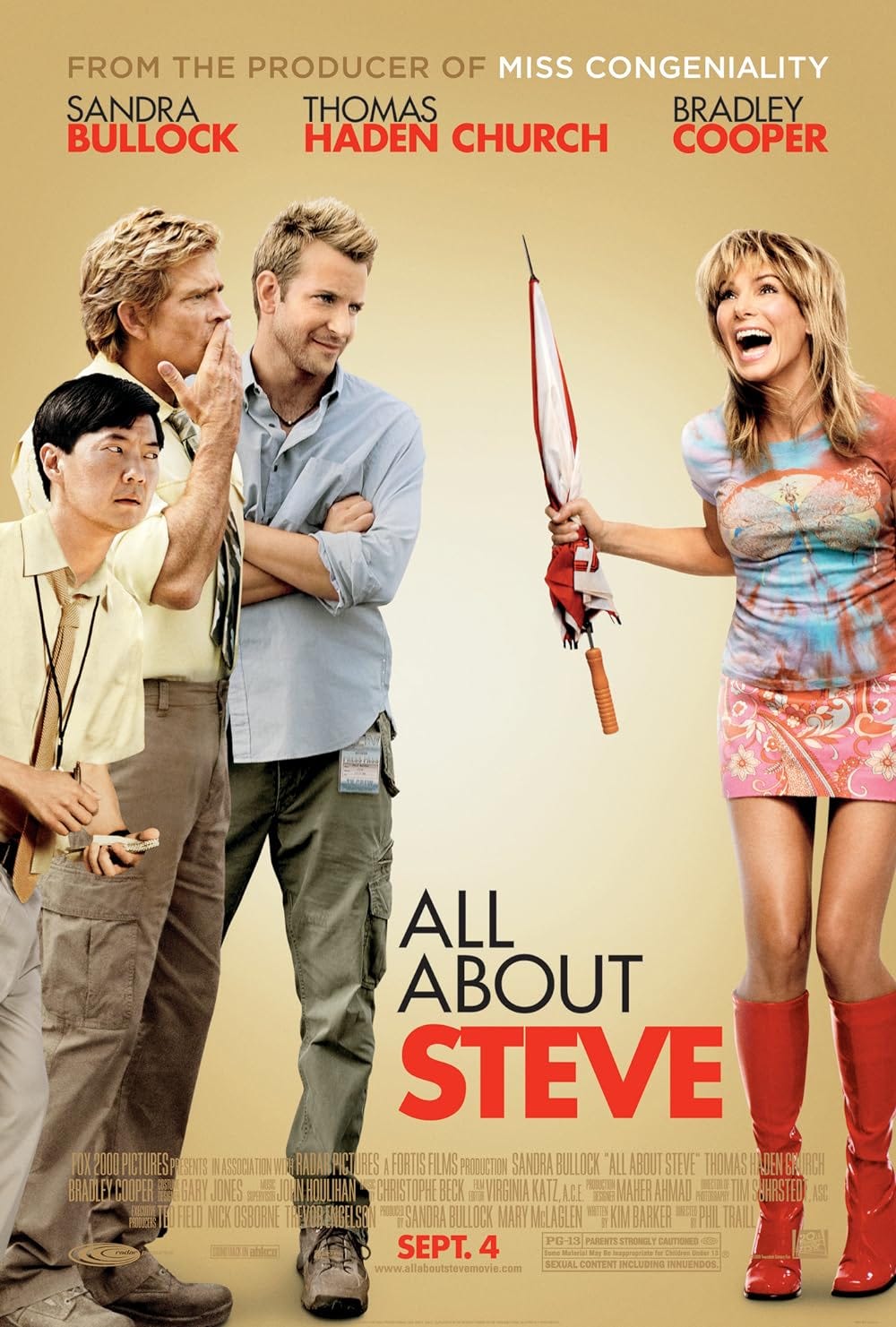
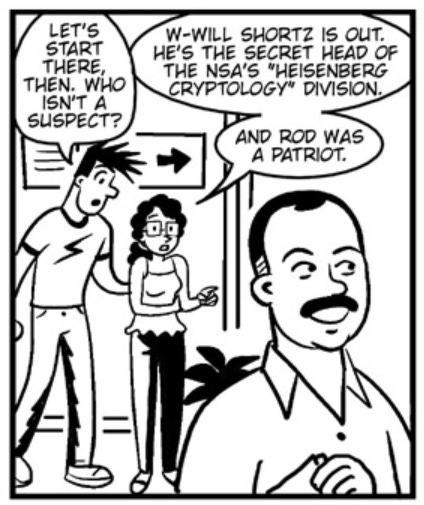
All About Steve is the worst of the lot, an unbelievably terrible romcom about a crossword constructor. Other TV and movies feature crosswords in passing, just long enough to show they’ve done no research whatsoever. The gold standard is probably “Homer and Lisa Exchange Cross Words,” a Simpsons episode produced in sync with Will Shortz, the NYT crossword, and the late Merl Reagle. Where does the Elsbeth episode fall on that spectrum? Better than most, but with some flaws I find hard to ignore. Minor spoilers follow.
The Good: It’s clear that deep research or native familiarity informed this episode’s script and production. The fandom is mostly accurate—one costume is stolen from the Wordplay documentary. The crossword-focused song performed onscreen is real. Insidery references include crossword faves like Anais Nin and the length of Elsbeth’s full name, 15 letters—perfect for a 15x15 grid.
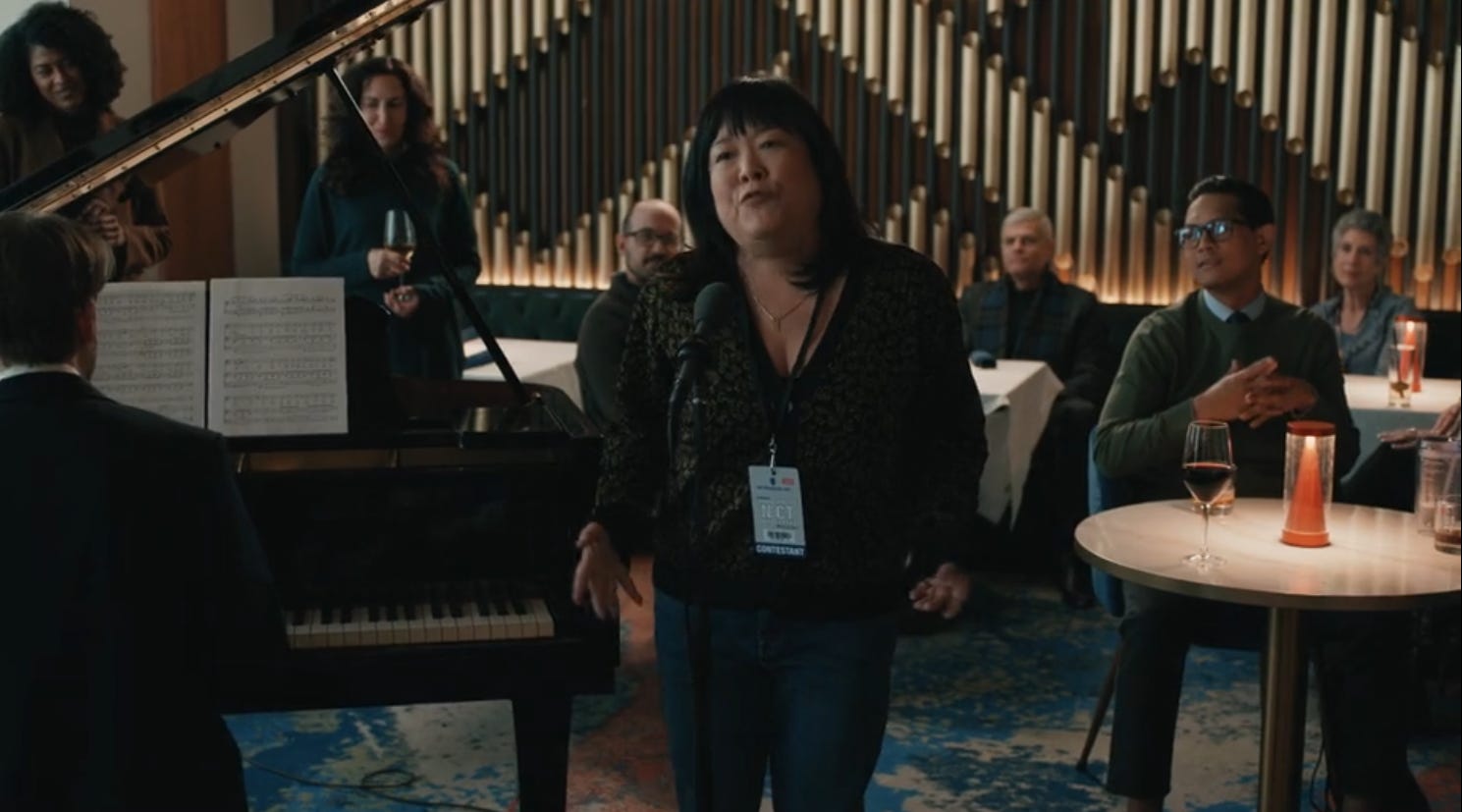
The killer is Simon, a returning champion and a prickly, awkward incel: he could’ve been unbearable in the skin of a lesser actor than Steve Buscemi. Buscemi is helped by a classy set of black-and-white sequences that show Simon’s romantic fantasies and fears. One side character nods to the detective in Fargo, in which Buscemi played another killer.
The victim, Morris Long, is, like Will Shortz (get it, get it?), a long-running crossword editor who’s founded a long-running tournament. At one point, actor Richard Robichaux deploys a Shortzian chuckle. In real life, Shortz’s predecessor Eugene Maleska served up classic literature and sniffed at the popular culture that Shortz brought into the puzzle. In the story’s condensed timeline, Long is a Maleska who morphed into a Shortz as he went along.
This prompts quite a lot of “ugh, why do we have to learn NEW things” chatter from Simon and his friendly rivals. And that’d be just fine if it didn’t seem like the episode agreed with them for most of its runtime.
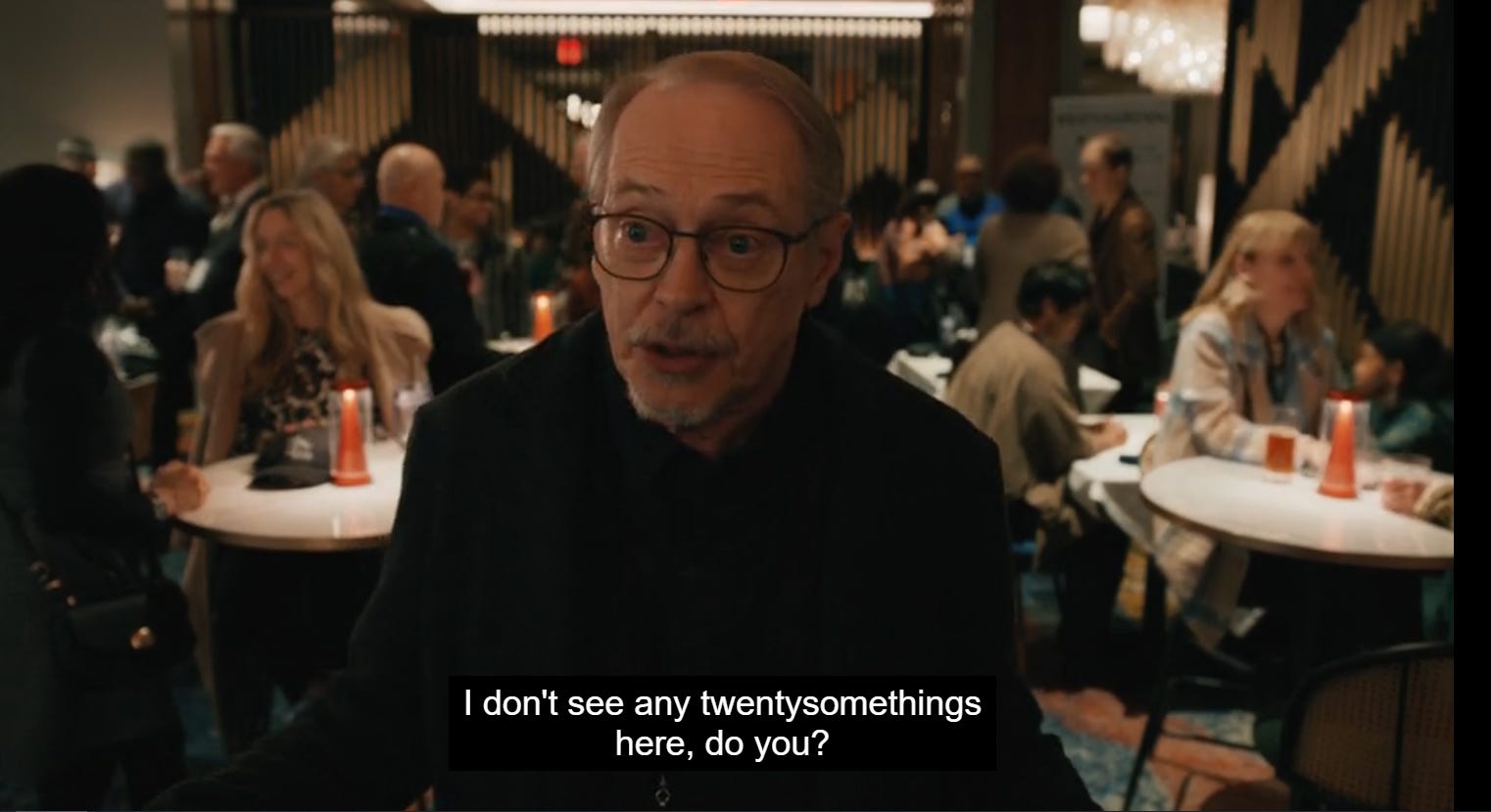
The Bad: The first forty-five seconds made me twitch. “I don’t see any twentysomethings here, do you?” Simon says as he enters. It appears the facts are on Simon’s side. If the puzzle really did appeal only to the cranky, youth-resenting older set, its interest in youth slang would indeed be folly—an attempt to impress an audience that isn’t there.
“We all try to keep up with pop culture, but none of us like it!” another competitor says later. “A TikTok dance?” sputters a third.
The ACPT indeed has a majority of older attendees who’ve been coming for a decade or more, but if you think there’s no Generation Z of solvers and constructors, you’re not paying attention. You’re certainly not paying attention to the winners, since the twentysomething Paolo Pasco took the gold last year.
(Those who’ve criticized the NYT puzzle from the left are going to roll their eyes when the early investigation suggests that maybe the motive for Long’s murder was hiring too many younger constructors.)
The episode does shift away from neophobia in its third act. To cover his tracks, Simon gets his chance to ghost-edit a puzzle for the Not York Times—er, the Met Tribune. You’d think everyone else who’s been griping about entries like “YASSS QUEEN” would be happy. Instead, they find the backward sensibility off-putting. And in the last few minutes, Trudy—the object of Simon’s affections—speaks up in favor of those contemporary references, saying she enjoys doing the puzzle with her kids.
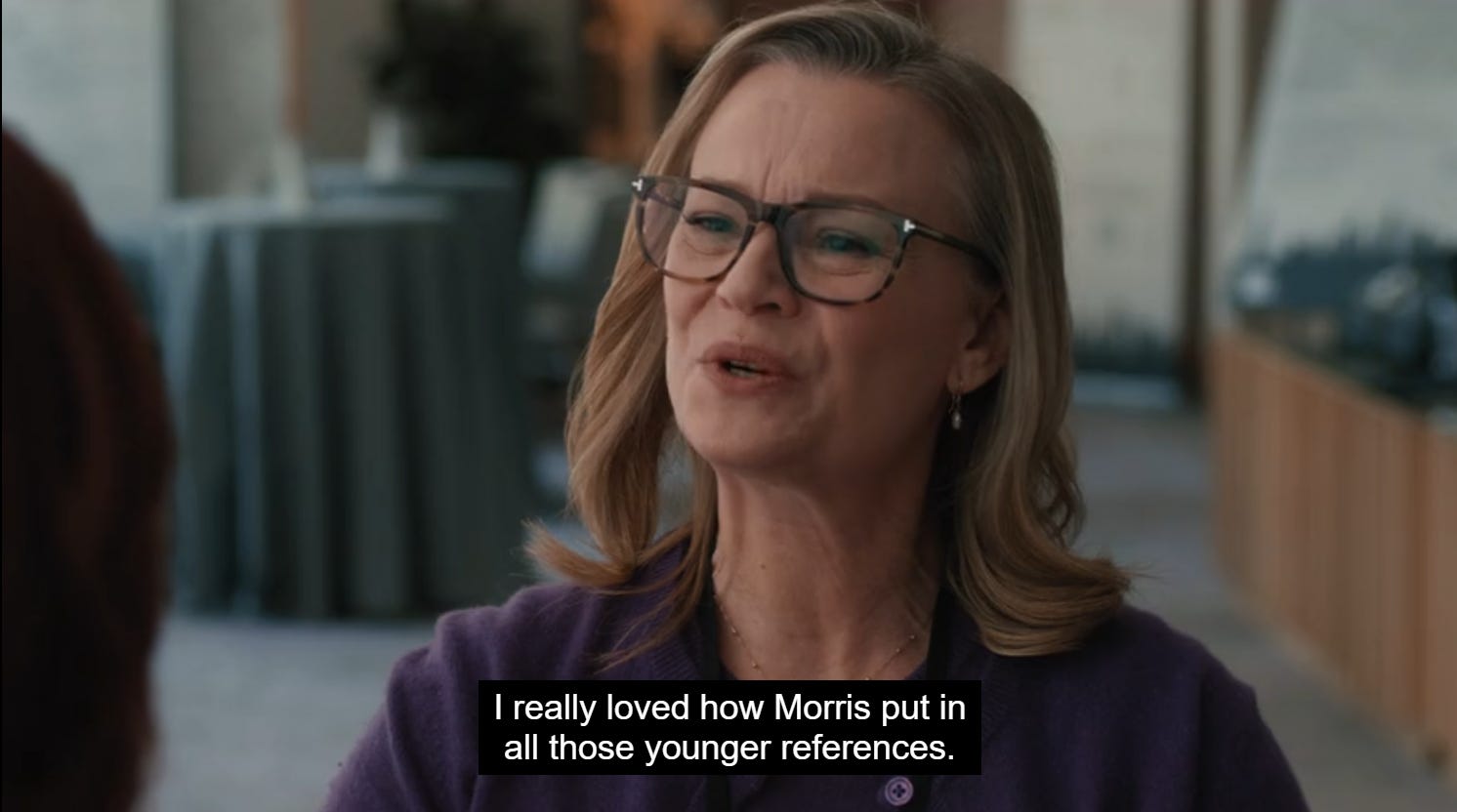
I could almost feel like we’ve come around to some balance on the issue, but there are still no young people at this tournament. The media property that really has a “youth problem” here is Elsbeth, a quirky, inoffensive crime series that wants to appeal to everyone but can’t help leaning into the preconceptions of its demographic. It’s made for network TV, and the viewers of network TV ain’t young people.
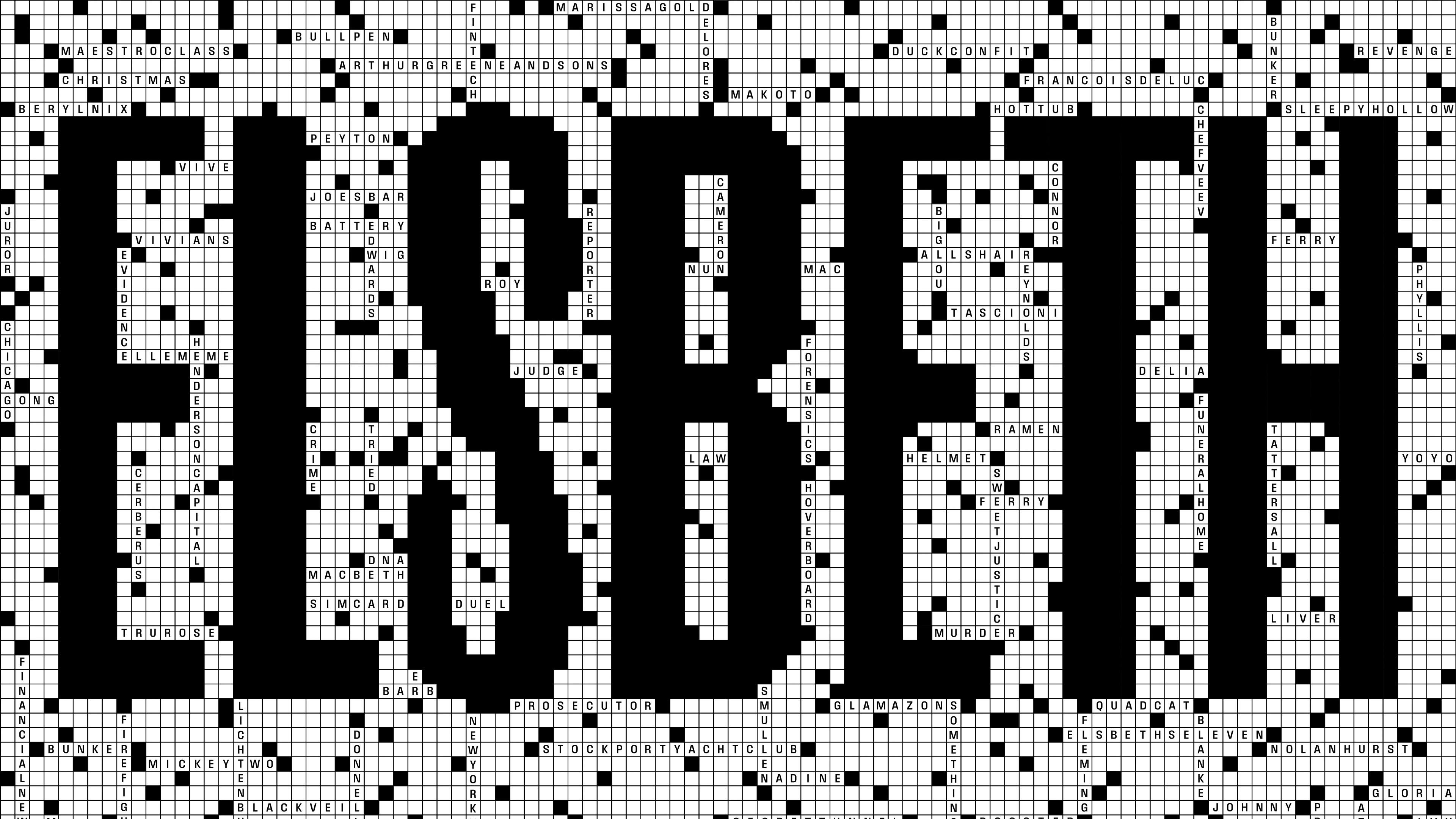
Also, nobody told the title card designer the rules about unchecked letters and two-letter words.
The Weird, but MAYBE Necessary?: Most of the episode’s other inaccuracies seem like compromises between portraying reality and sticking to the show’s formula. The ACPT is a one-weekend event, and most other conventions are one-day only, but the “NCT” stretches over two weekends, allowing enough time for Long’s body to be discovered and Elsbeth to start investigating before the competitors disperse.
The biggest problem with a “Who killed Will Shortz?” premise is that almost nobody would kill Will Shortz, so Morris Long—or “Bill Pants,” as my wife dubbed him—is much more kill-worthy. He’s abusing his power and reputation to sleep with multiple female contestants. When Simon calls Long out on this—and hits him in the ego with long-simmering “youngs are bad” grievances—Long bans Simon from the tournament. One doubts Long has a husband waiting for him at home.
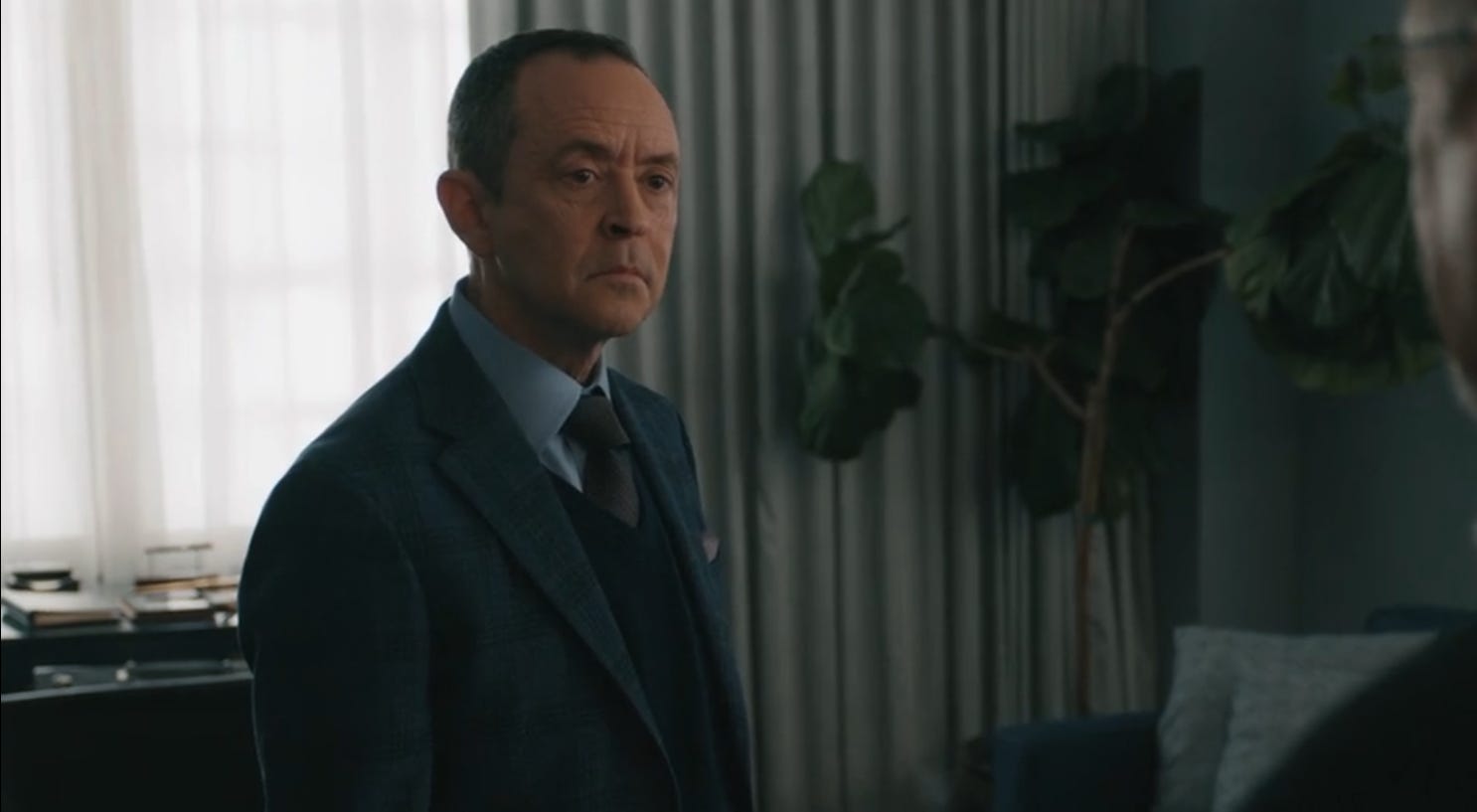
From my perspective, Long creates a sort of uncanny valley effect: he’s too close to being Will Shortz for me to ignore his inspiration, but too far from being Will to look “right.” Just as the tournament in general is almost but not quite the ACPT. Simon’s career as a piano tuner might be a nod to Dan Feyer’s career as a pianist, but he’s too distinct from Feyer to present the same problem.
(I told a couple of untruths about Will in my own abovementioned story, but I used his real name.)
The story’s structure limits its intrigue. It’s not a whodunit, it’s a howcatchem—we see the murder and cover-up as it happens. So the only question is whether Elsbeth will figure out what we already know…as she does every week. This is not a story format that allows for many surprises. The biggest twist appears in the last two minutes: it seems Elsbeth’s politico boyfriend is dumb enough to tell two contradictory stories right in front of her.
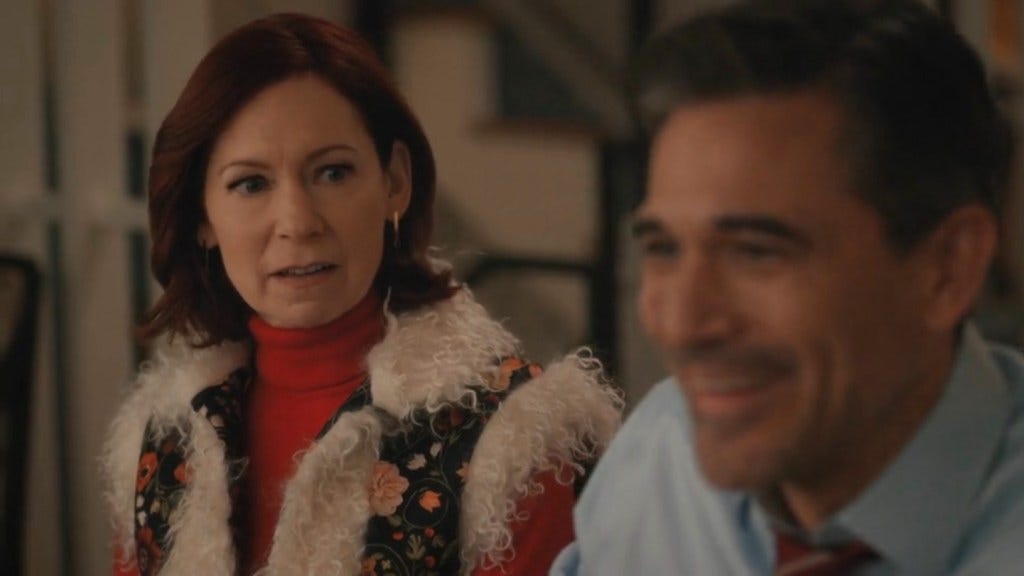
But some TV shows are like crossword puzzles: you go in confident about how the experience will end. The comforting familiarity is the point.
For all its flaws, this is a piece of television that cares about crosswords, and that alone is enough to elevate it over most treatments. I’m not at a vantage point where I can enjoy all its simple pleasures, but I hope others will.
For now, you can watch the episode here. It’ll probably be streaming-only after two or three more weeks.
Oh, I have opinions about this one... and insights. You will see. You will all see. >:'D
I had my eyes peeled for a nanosecond-long Will Shortz cameo, but hadn't noted the last name of the victim! And they got the color of the folders dividing contestants right!