Jim Shooter
What would you do if you could edit the universe?

Was just getting up this morning when I learned Jim Shooter passed away. Shooter was the kind of guy who was always gonna be called a “controversial figure” in his obituaries—this thread covers a lot, but I’ll do my best to sum up.
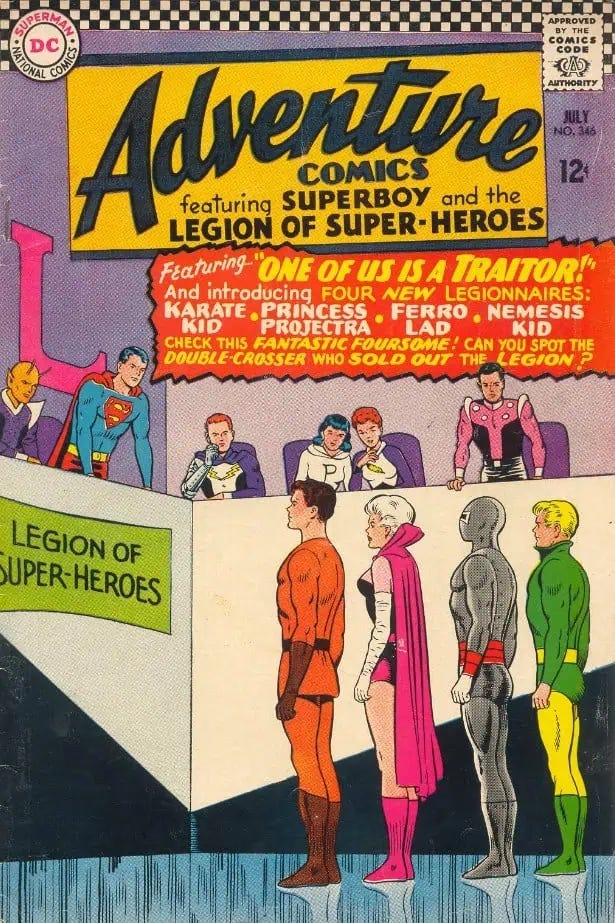
After debuting as a writer on The Legion of Super-Heroes when he was barely in his teens, Shooter worked in and out of comics for a decade or so before getting into editorial. He became the youngest editor-in-chief of Marvel Comics, ending a “revolving-door sequence” of EICs who had tried and mostly failed to follow in Stan Lee’s footsteps.
He was one of the few insiders who fought to give creators more benefits and royalties, and he turned the 1970s Marvel from a dodgy, unprofessional operation into an efficient deadline-meeting machine. With those points on his resume, you’d think he’d be a hero to all comics pros everywhere, right? How difficult a guy would he have to be to squander that much goodwill?
Well-ll-ll…
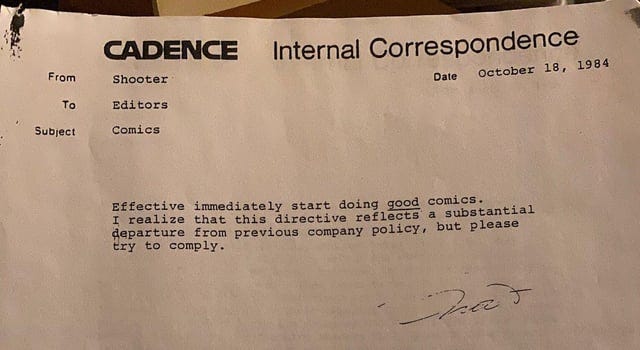
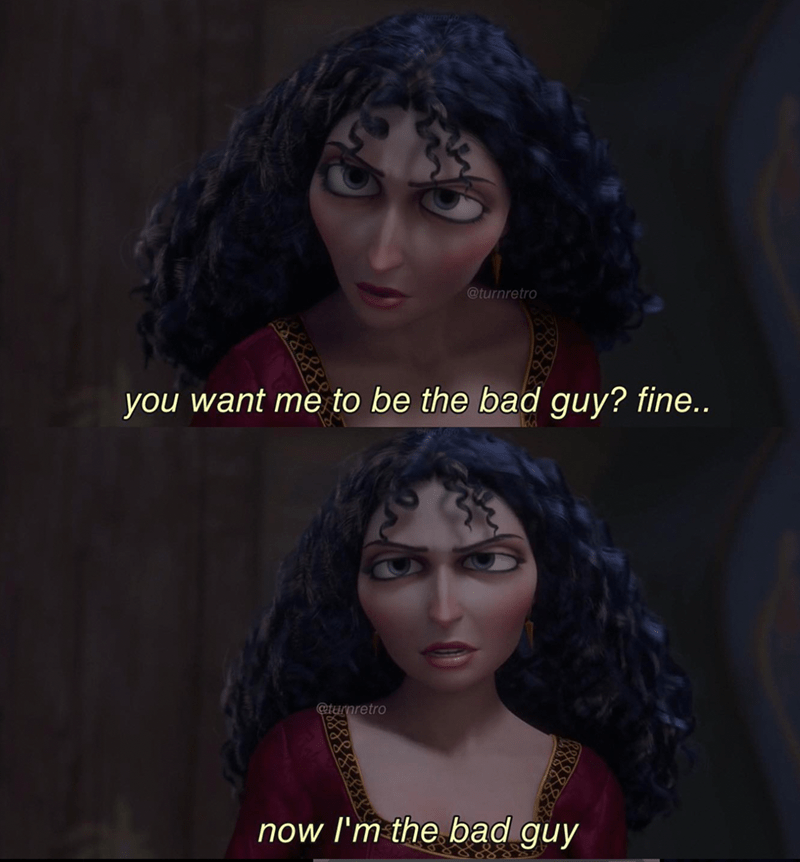
Writers love the concept of creative freedom and like to cast editors as the bad guys who tie their hands. Some comic-book editors, including Stan Lee and his imitators, try to resist this sort of “bad guy” casting. Others lean into it. Shooter embraced the “bad guy” label in the short term, confident everyone would see the wisdom of his leadership in the end.
Thing is—for a while, that was how it happened. Time did prove the wisdom of many of Shooter’s early calls. John Byrne, another famously egotistical comics creator, admitted he’d been wrong and Shooter had been right in one of Shooter’s most famous editorial decisions—one which led to the “Dark Phoenix Saga” and its tragic conclusion.
![X-Men: Dark Phoenix Saga [New Printing]: Claremont, Chris, Byrne, John, Byrne, John, Byrne, John: 9780785164210: Amazon.com: Books](https://substackcdn.com/image/fetch/$s_!FZxu!,f_auto,q_auto:good,fl_progressive:steep/https%3A%2F%2Fsubstack-post-media.s3.amazonaws.com%2Fpublic%2Fimages%2F653e8bff-b4e2-4086-890c-25a39dc4baf8_1665x2560.jpeg "X-Men: Dark Phoenix Saga [New Printing]: Claremont, Chris, Byrne, John, Byrne, John, Byrne, John: 9780785164210: Amazon.com: Books")
But Byrne also said this of Shooter, and it seems close to the consensus—
Shooter came along just when Marvel needed him—but he stayed too long. Having fixed just about everything that was wrong, he could not stop “fixing.” Around the time I left to do Superman [in 1986], I said that I thought Shooter and [DC editor-in-chief] Dick Giordano should trade jobs—it was DC that needed fixing then—and do so about every five years or so. Shooter had put Marvel into a place where all that was needed was a kindly father figure at the helm—and that was not Shooter!
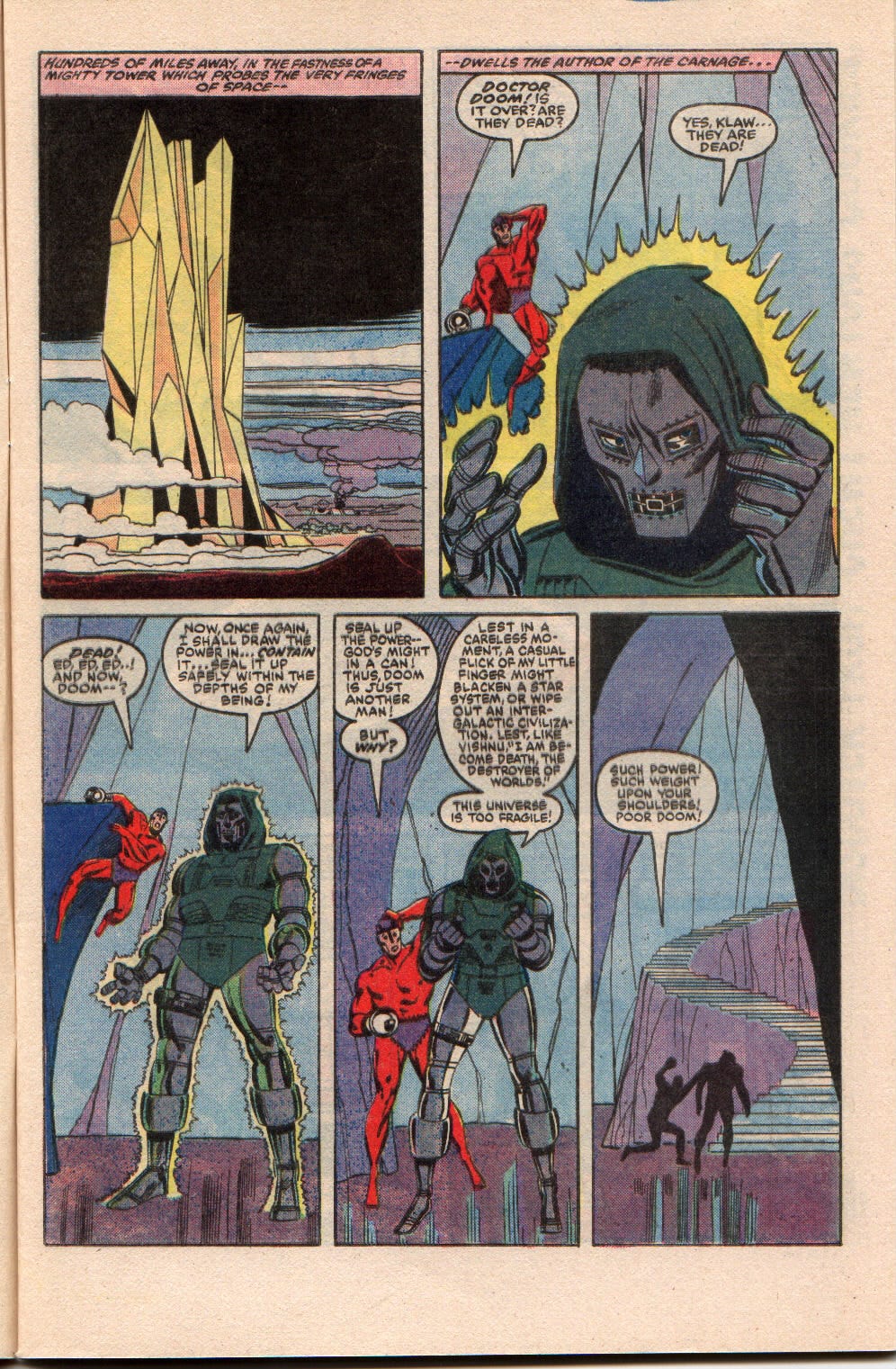
Secret Wars and Secret Wars II, published in the latter half of Shooter’s tenure, were two of the first “company-wide” crossovers, including a major role for almost every character Marvel was headlining at the time. They were the only ones ever written by a company editor-in-chief. And both of them ended up centered on Shooter’s favorite theme—what does one do when one gets more power than one can handle? (Shooter’s critics would probably retort, “Write company-wide crossovers.”)
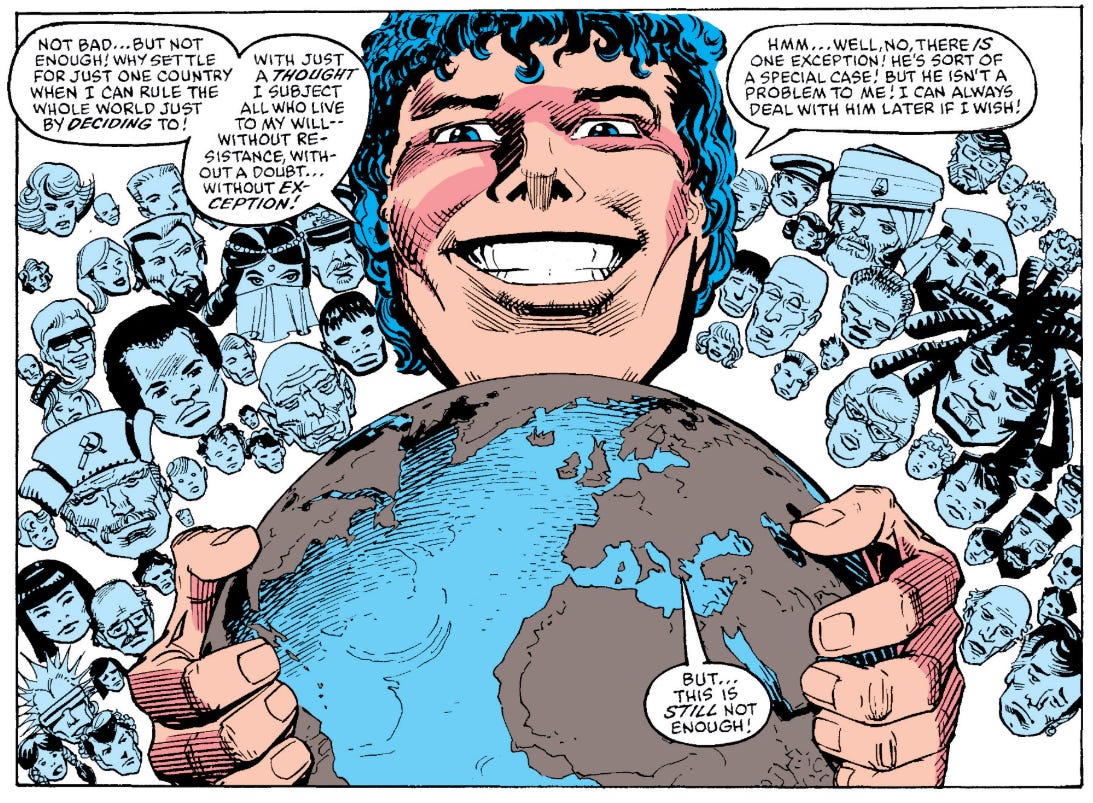
Shooter’s meditations on power informed a lot of his other writing, including perhaps his most autobiographical character, government employee Henry Peter Gyrich. While Shooter creations like Korvac and the Beyonder had the literal ability to reshape the universe, Gyrich is a more mundane example of a guy with disproportionate power. In his debut, he shows up at Avengers headquarters and starts dictating policy.
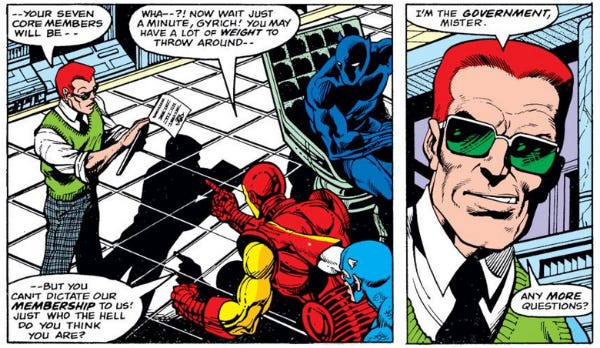
I used Gyrich in my own (single) Marvel story back in the day (Giant-Size Avengers #1, 2007). Since his debut, the character has sometimes been a straight-up bad guy, but in his best moments, he—just like Shooter—was an abrasive jerk who was sometimes irritatingly right. I mean, Gyrich’s introductory argument was that the Avengers had gotten too crowded with members to keep things organized—and here’s the cover of the issue where he said that:
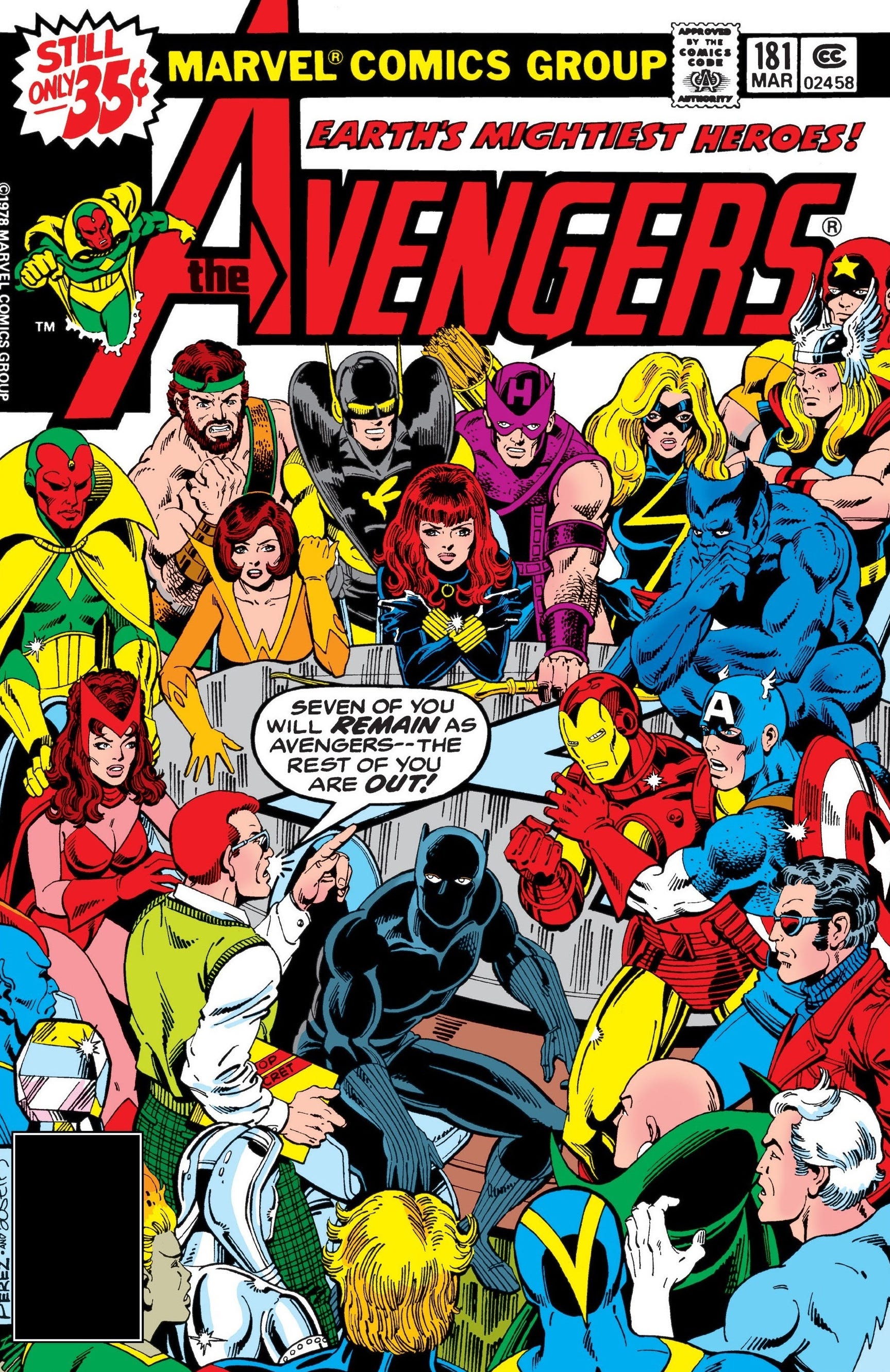
Does it make him the bad guy to be the one telling all these colorful, creative Marvel personalities “no”? Somebody has to, dammit.
Shooter worked as writer, editor, and editor-in-chief at other companies after leaving Marvel. His later work never quite recaptured his glory days, but it was never boring.
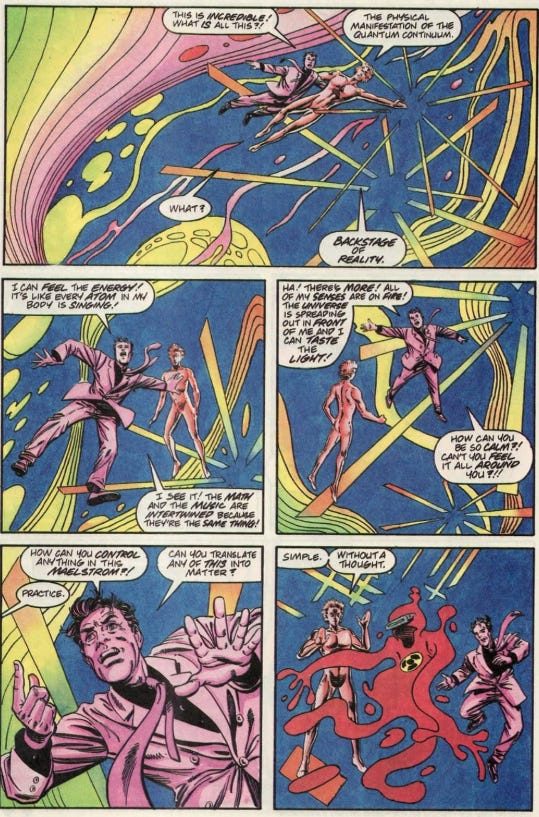
Still, it’s his years at Marvel people remember most.
He could be self-aggrandizing, he could be bizarre, he could drive creators up the wall, and nobody seemed all that sorry when he was fired in 1987—but he left Marvel much better than he found it, and he’s one of the reasons it survived to the present at all. For this and other contributions, he should be celebrated.