Logopoeia
Or, "How much @#$% can we lexify? Can we lexify 'lexify'?"

From Philip M. Cohen, “Logopoeia,” Word Ways #11.4 (1978):
Logopoeia (a coined word meaning “word-coining”) is a natural activity of English-language speakers; this paragraph, in fact, contains three words in addition to logopoeia that are probably not in any dictionary. But the word-coiner, if not being deliberately nonsensical, is constrained by the desire to get a message across. The practice is more suspect in logology, where the only acknowledged constraint may be the logological goal. Here it is easy to slip from coining words to coining “words” and thence to words?.
I’m not sure which three words Cohen means—logology has some history in English dictionaries, but maybe the variations word-coiner, word-coining, and logological are considered outliers. His use of punctuation—words, “words,” words?—indicates three levels of sketchiness, maybe comparable to the recent coinages lowkey, lowkenuinely, and lowkirkenuinely. (My spell-check approves the first of those but not the latter two. And okay, THIS will DEFINITELY be the last time I use that last one! Hate that word!) How much of the riffraff do we let in to the party? How strict should we be in our play?
Working with language instills a certain humility because those who set out to coin words in any field have little success. The image of a Shakespearean genius throwing out words like confetti upon the grateful commoners has a certain appeal but little basis in reality. (Someone should do a list of famous authors’ unsuccessful coinages—the words they worked out that were never, or almost never, used again. Is that “someone” going to end up being me? Maybe!)
However, creative linguists can’t be too strict with themselves either. Even if you’ve never seen the word disestablishing before, you probably wouldn’t question it the first time you did. But where’s the limit? Antidisestablishmentarianism is a real word, but it sounds made up, and nonultramagnified is a word most people would consider a cheat.
In the old days, we used collections of dictionaries to verify words we didn’t know. In the same issue of Word Ways, Warren N. Cordell contributes “The Great Dictionary Quest,” a redemptive tale of his own dictionary collection. While that collection reached a point that would seem to inspire an episode of Hoarders, it had a useful afterlife—the Cunningham Memorial Library at Indiana State University put his 453 dictionaries into its new Cornell Room, there for others to consult and verify.
Today, we often use Google, OneLook, or—despite advice—ChatGPT, Claude, Gemini, or Opera. And sometimes we check around online to see if we can spot the word in use “in the wild.” This is important when diagnosing words like “subbookkeeper,” which word nerds love to talk about but may no longer meet the criterion of actual use.
In crosswords, a related phenomenon to the “cheat word” is “green paint.” Crossword constructors say that something like RED CAR or TALL WOMAN, while a correct phrase that you might see in writing, does not deserve to be a crossword entry because the two words have no special meaning when put together. The phrase GREEN PAINT itself used to be an example of this, since it only meant “paint that is green.” But now, because it’s come to take on that meaning as “dodgy crossword fill,” GREEN PAINT is no longer green paint.
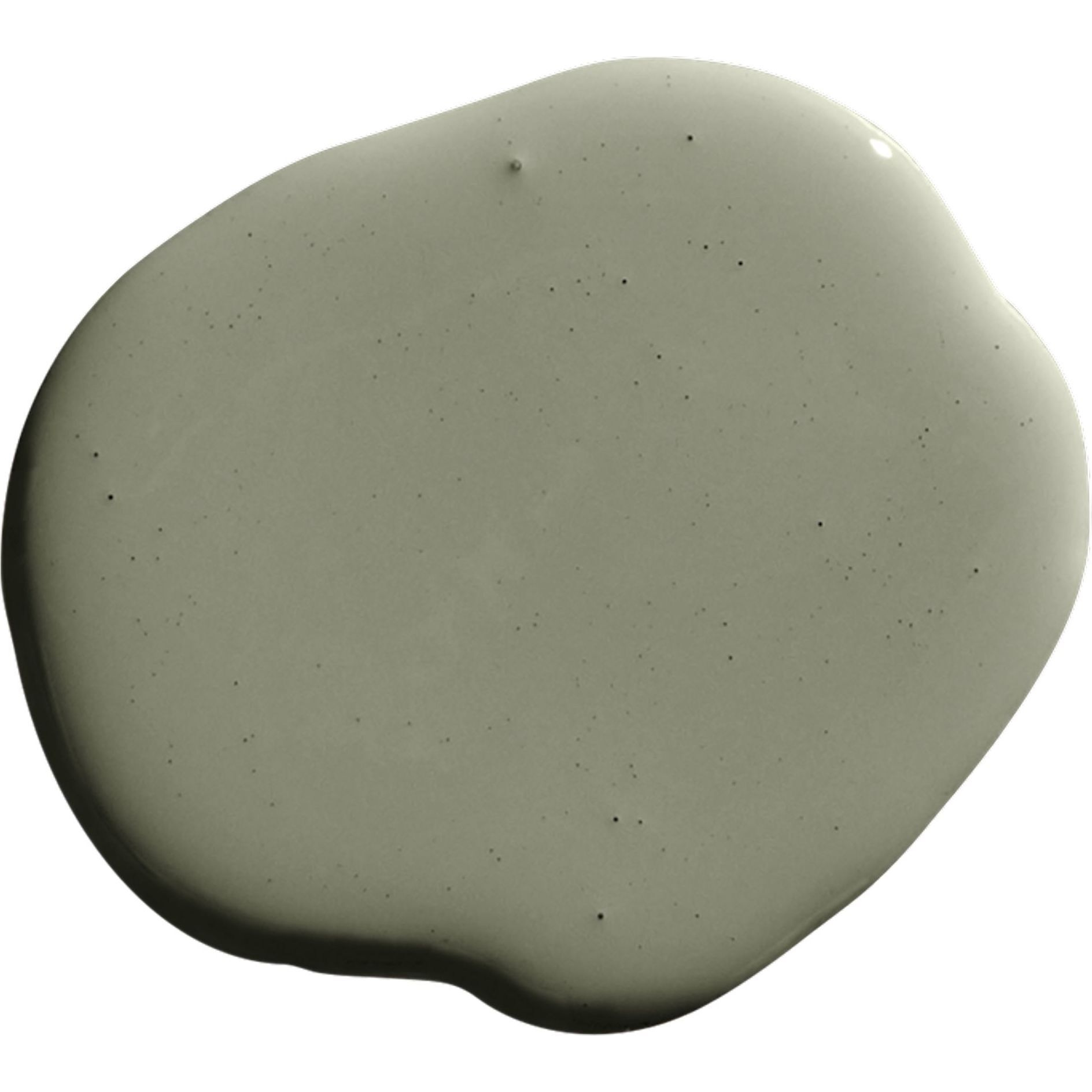
Negotiating the bounds between acceptable, questionable, and unacceptable is more than I have time for this morning (ACPT woohoo!), and I’ve always erred on the side of creativity. But the questions are always worth asking!
re: GREEN PAINT ironically not being GREEN PAINT: https://amandarafkin.blogspot.com/2020/09/puzzle-19-try-this-coat-by-thomas-j.html
Maybe I'm too literal, but I can't help wishing that the picture of a paint puddle accompanying the expression "green paint" had actually been green instead of grey.