Pixie Trix Volume 3 Headers
Let's explain some jokes!

It’s a busy time for me, with a bunch of things going on. Pixie Trix Comix (the series) is getting ready to release its third and fourth volumes, so I’ve been serving as editor on those. Among other things, that’s meant writing the chapter titles!
A quick note—PTC describes itself as an HBO-level “R-rated comedy,” so some of the images and language in these samples can be a bit eyebrow-raising. You’ve been warned!
As I mentioned before, this series is named for a fictional comics publisher, so the story titles are references to the sometimes obscure language of comics fandom and production. Volume 3’s first story is our deepest cut yet.
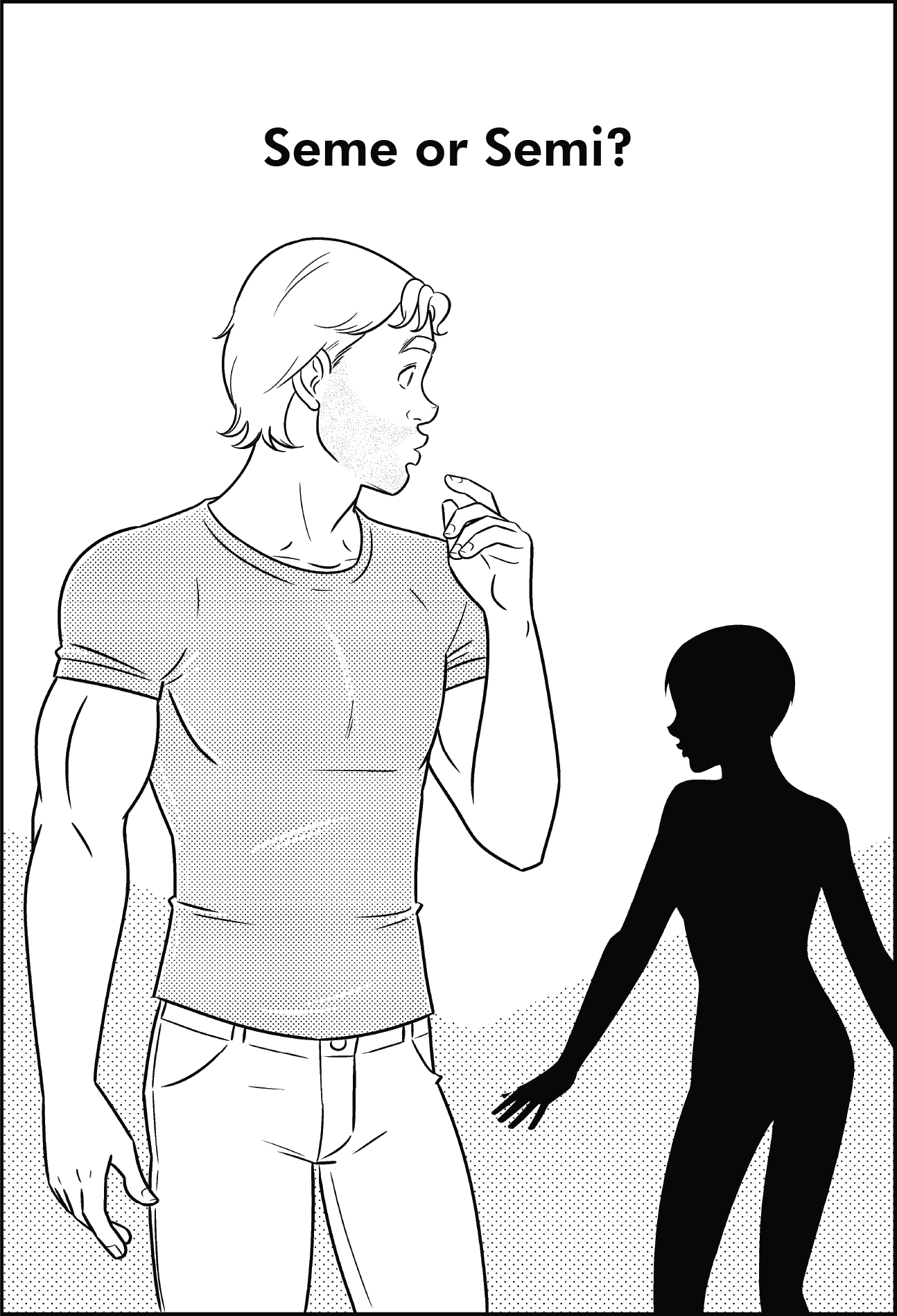
The terms seme and uke come from the robust genre of gay romance, AKA yaoi, in manga, but don’t feel bad if you don’t know ’em. Even most of the characters in Pixie Trix have to Google what they mean:
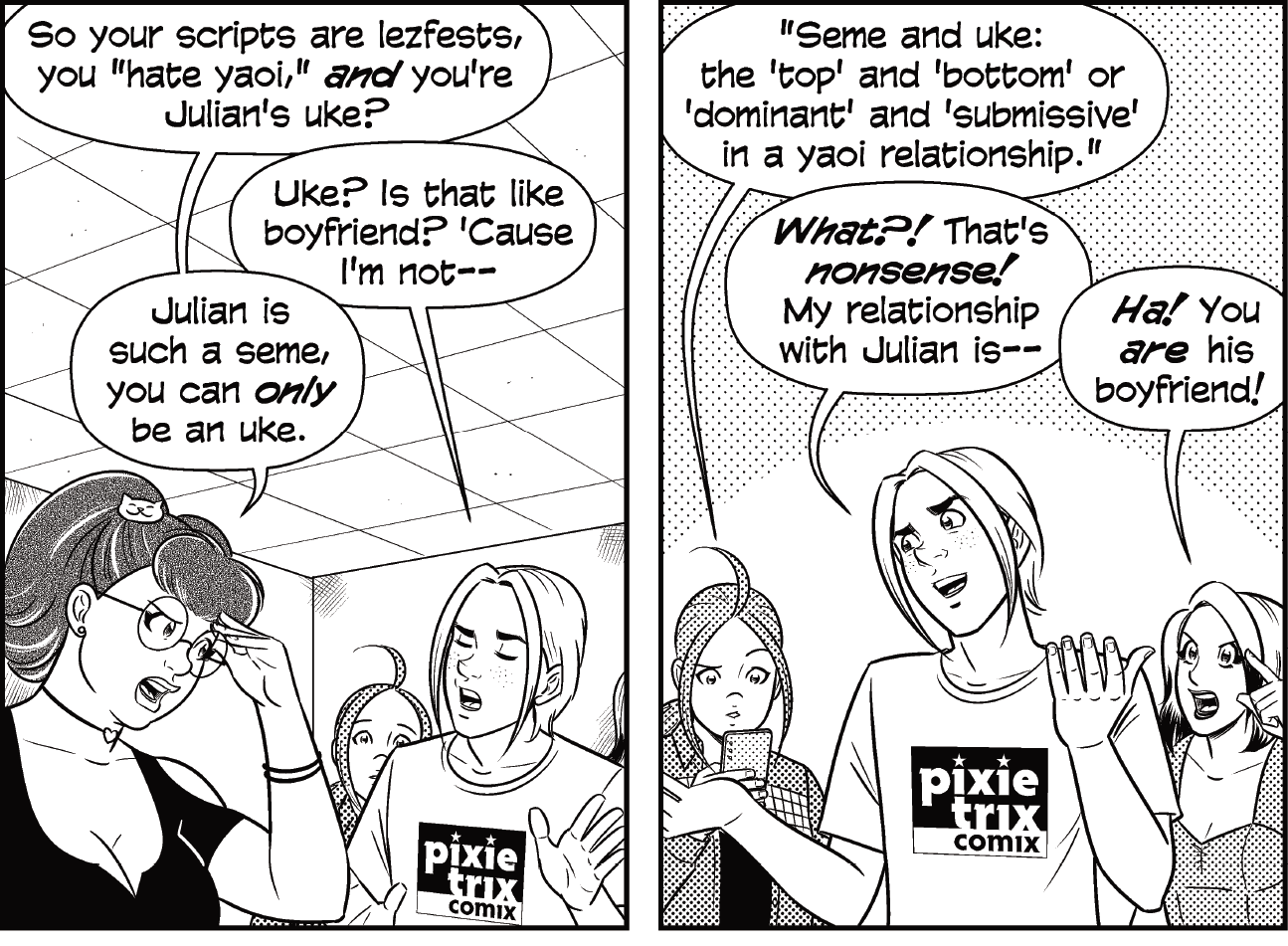
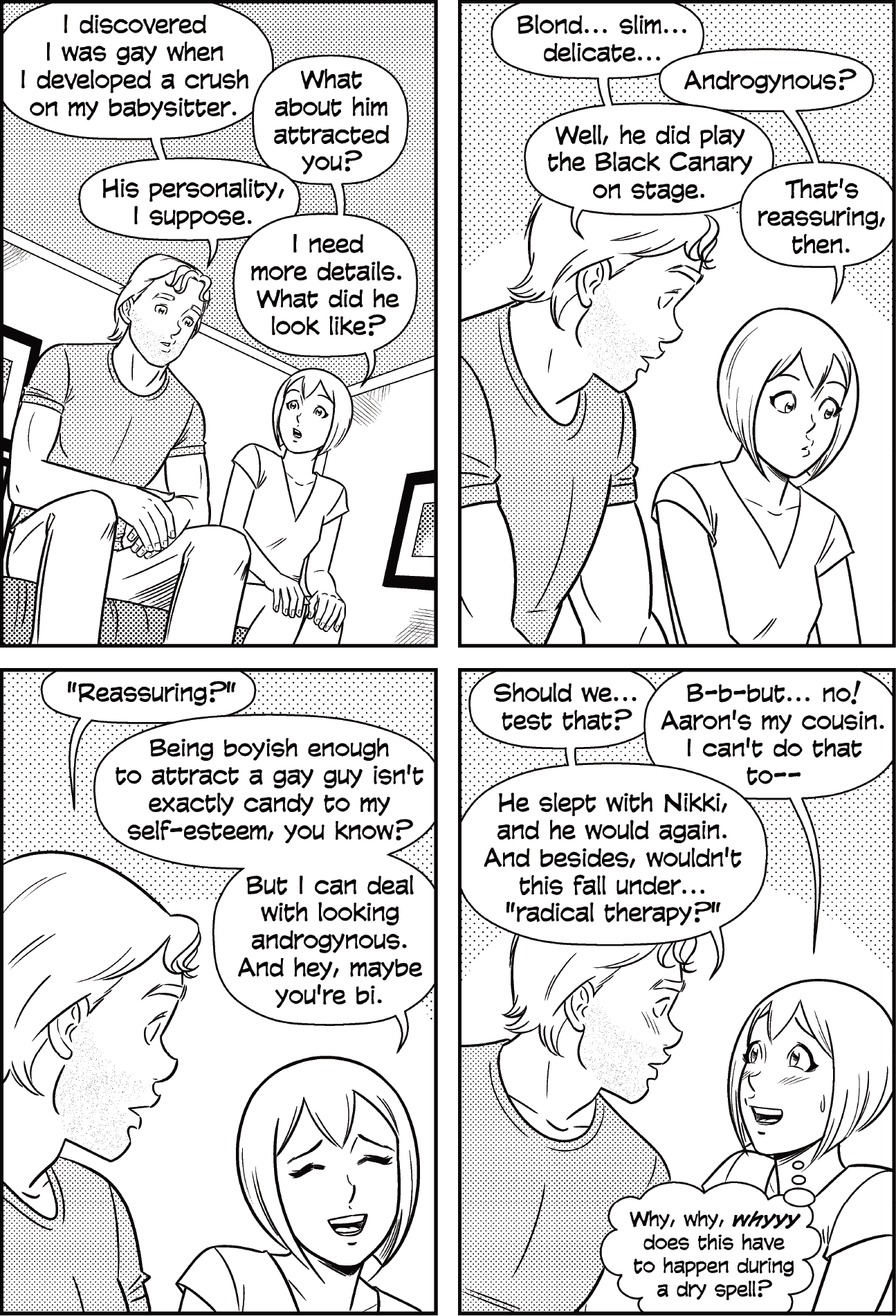
Ramona (seen at left above) is enough of a yaoi fan to use such terminology when talking about real people. But the reality of relationships is more complicated, as Julian discovers: he’s not even 100% gay, just drawn to a certain body type that appears more often on men—slender, “boyish,” and small enough to stir his protective instincts. So in the end, he’s less “seme,” more “semi.”
In the next installment, the confused and “macho” Aaron befriends another guy, straining his relationship with Julian even further and kicking off a tense video gaming session. The title for this one won’t mean much to manga fans, but it might mean something to webcomics fans…
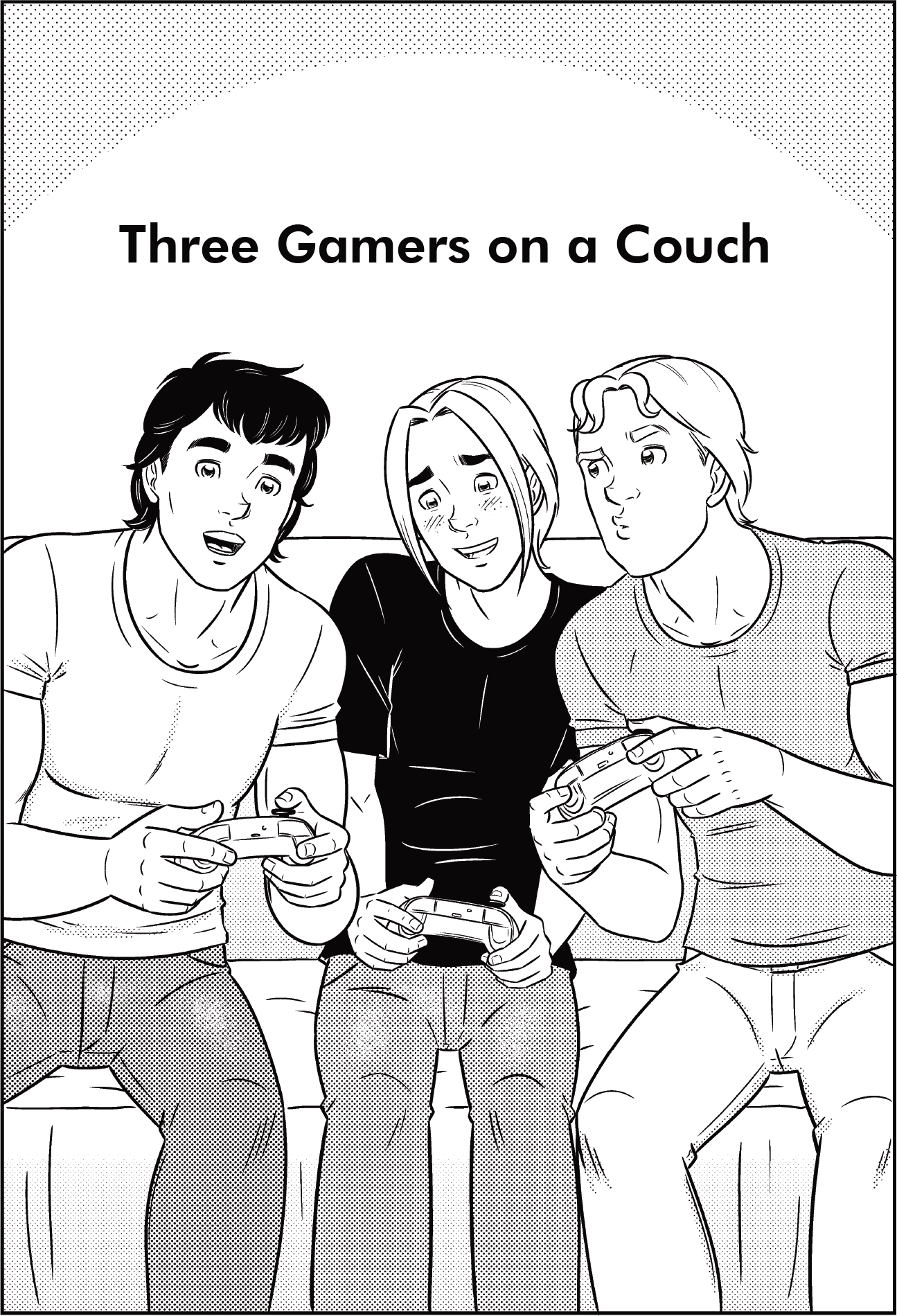
In the 2000s, the most popular webcomics genre was sometimes described as “two gamers on a couch,” thanks to the massive success of Penny Arcade and several popular imitators.
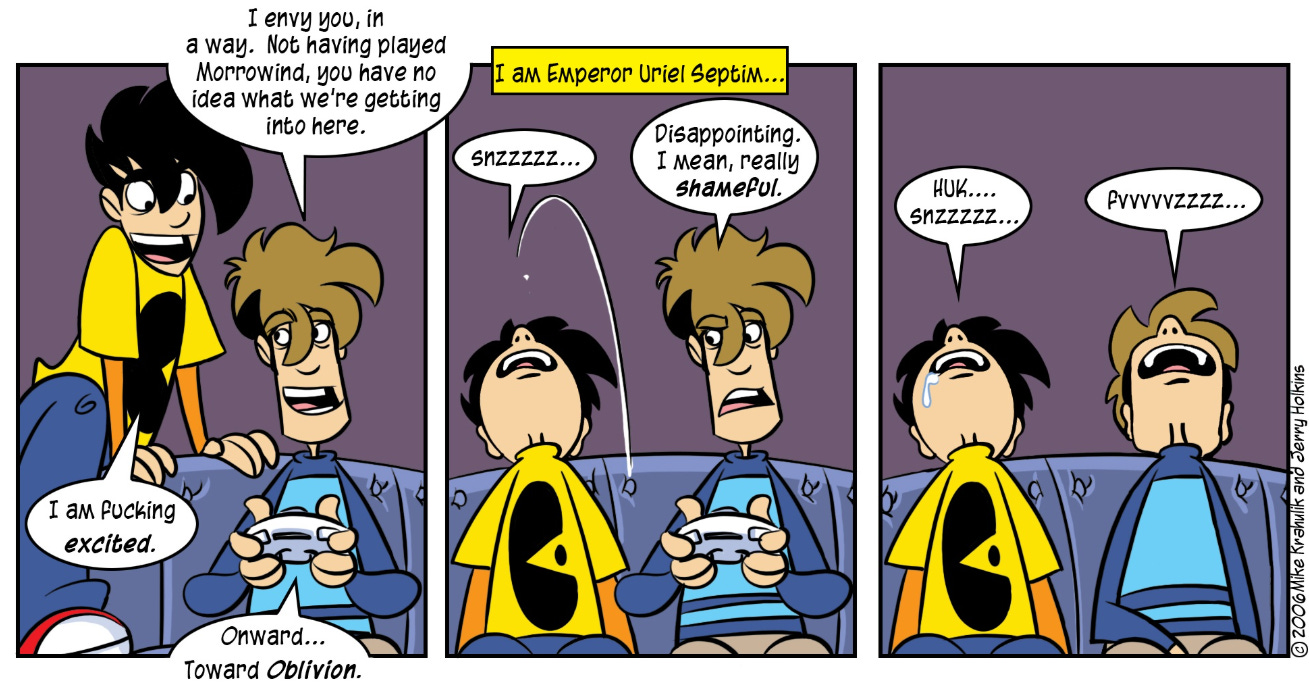
That trend is now about as distant in the rearview mirror as iPod-sharing, but if you remember, you remember.
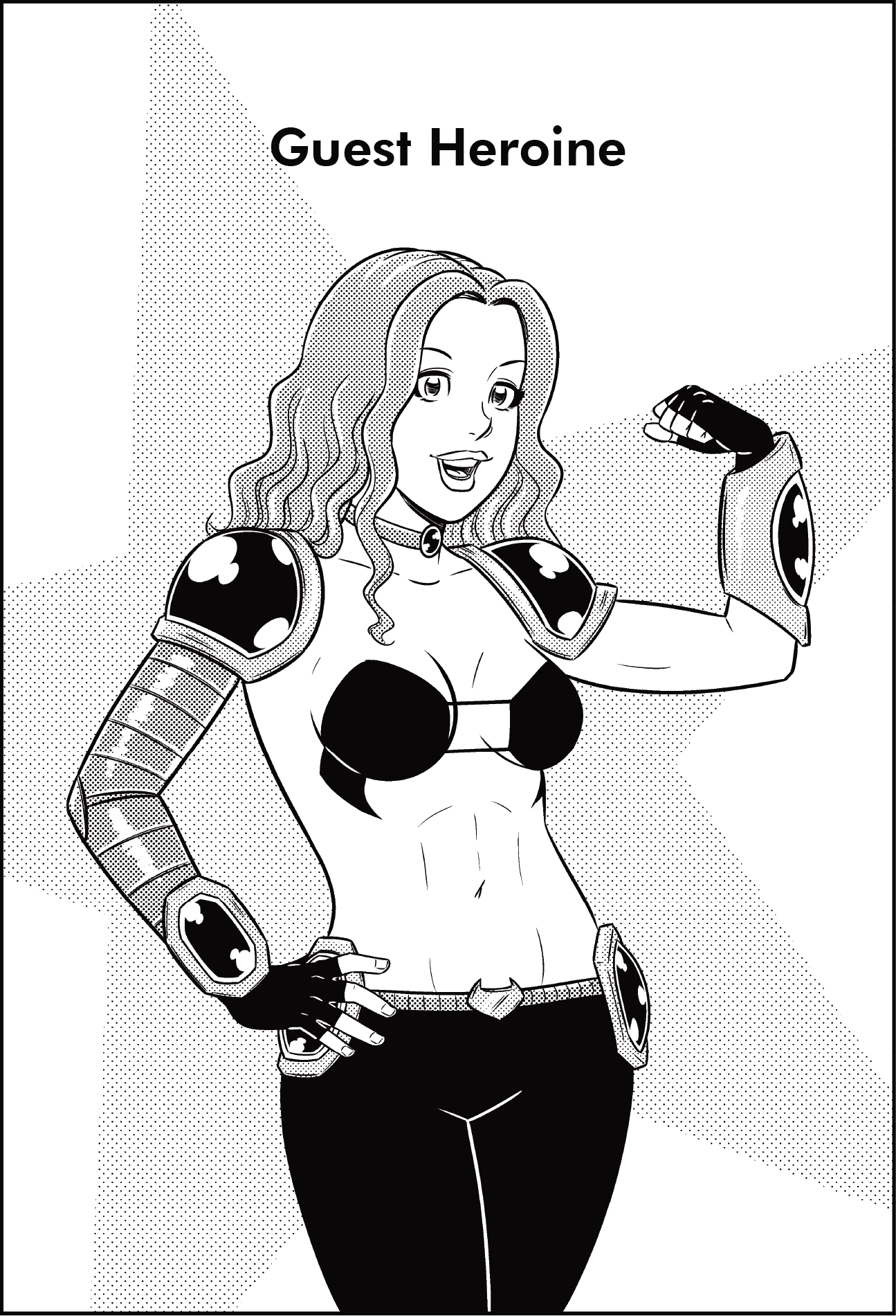
With “Guest Heroine,” we’re getting back to more superhero-inspired stuff. Any time a hero has a sustained appearance in another hero’s series, they qualify as a guest hero. Sandra here is “just” a successful actress and model, but that makes her plenty heroic to social climber Sharon.
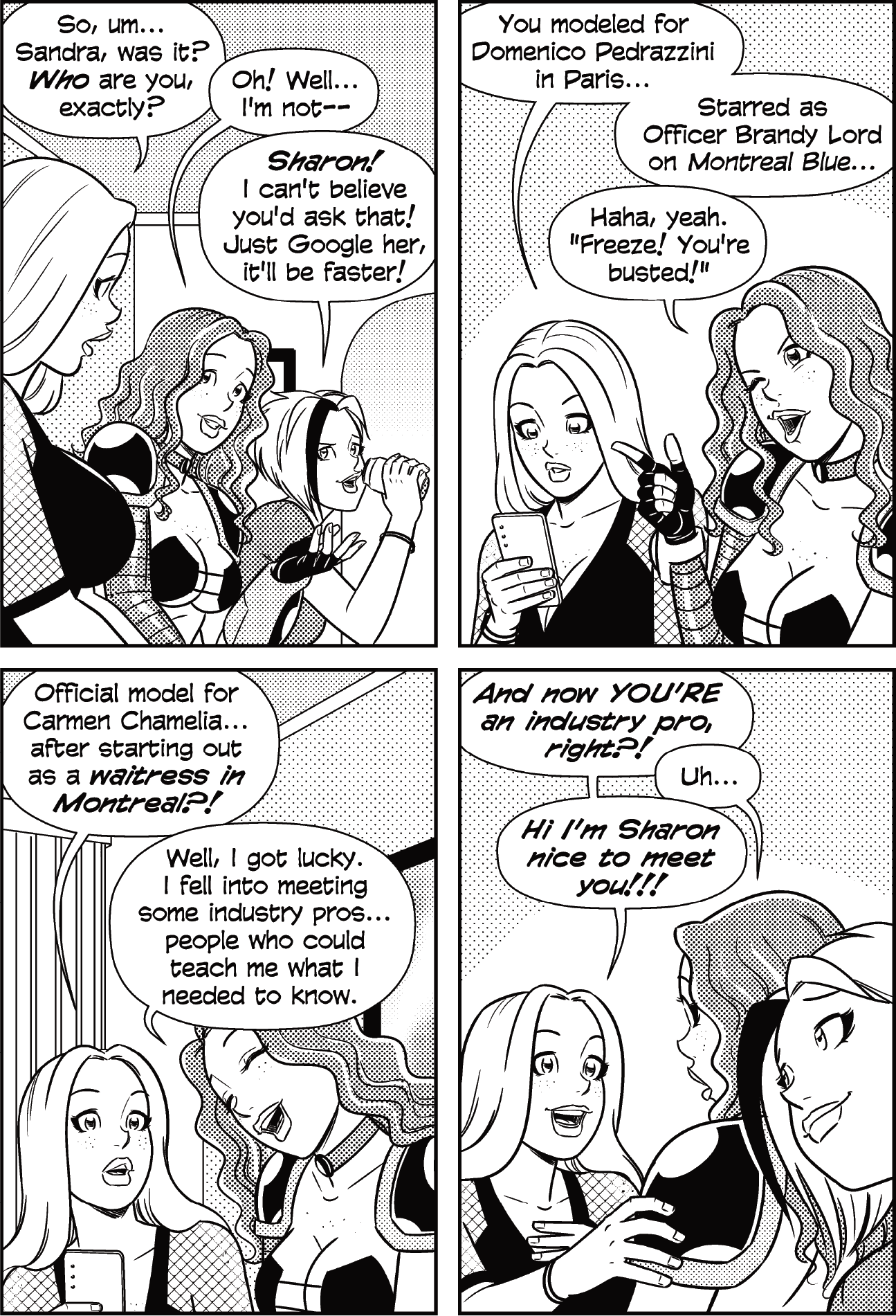
Sandra’s appeared in a series of her own and isn’t part of Pixie Trix, so she might qualify as a literal “guest heroine” here, too.
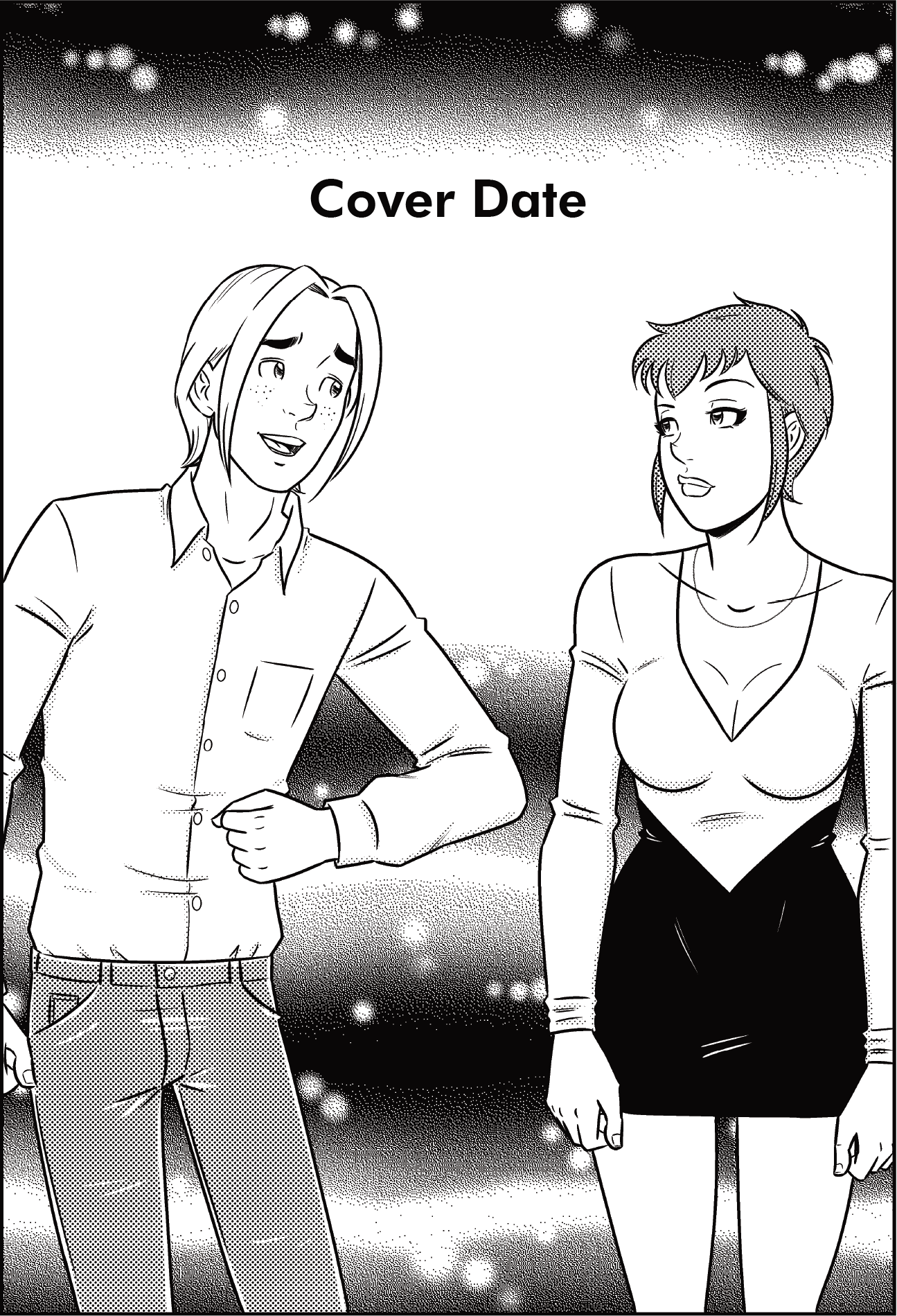
The simplest titles usually take the most time to come up with—of the five chapter titles in this volume, this was the toughest nut to crack. In comic books, the “cover date” is the publication date put on the cover (which sometimes diverges from the comic’s actual release date). In this romantic comedy, as you might expect, it’s got more to do with the romantic kind of date, a staged “cover” for Aaron’s basically-single status.
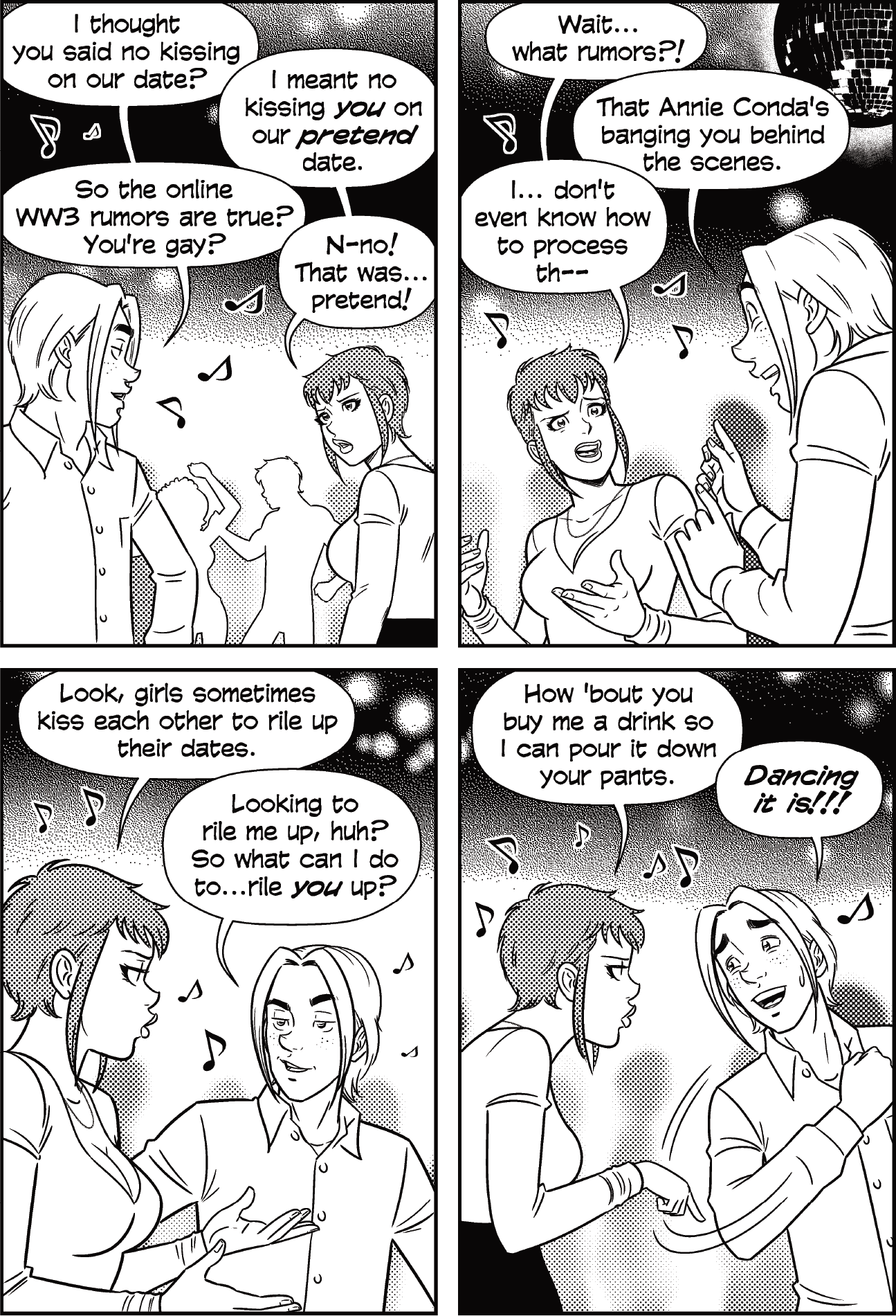
It’s probably not surprising he’s basically single at this point in the volume, is it?
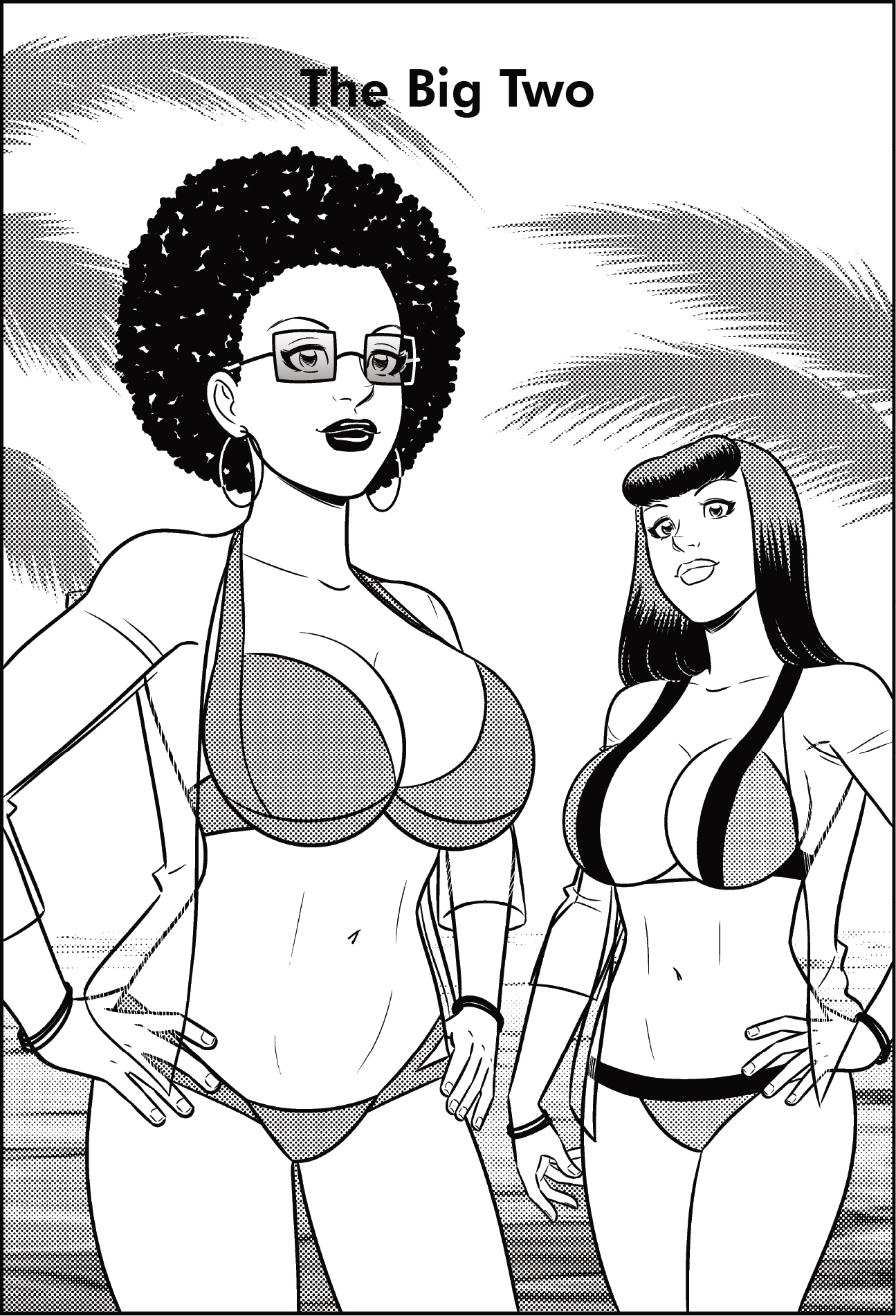
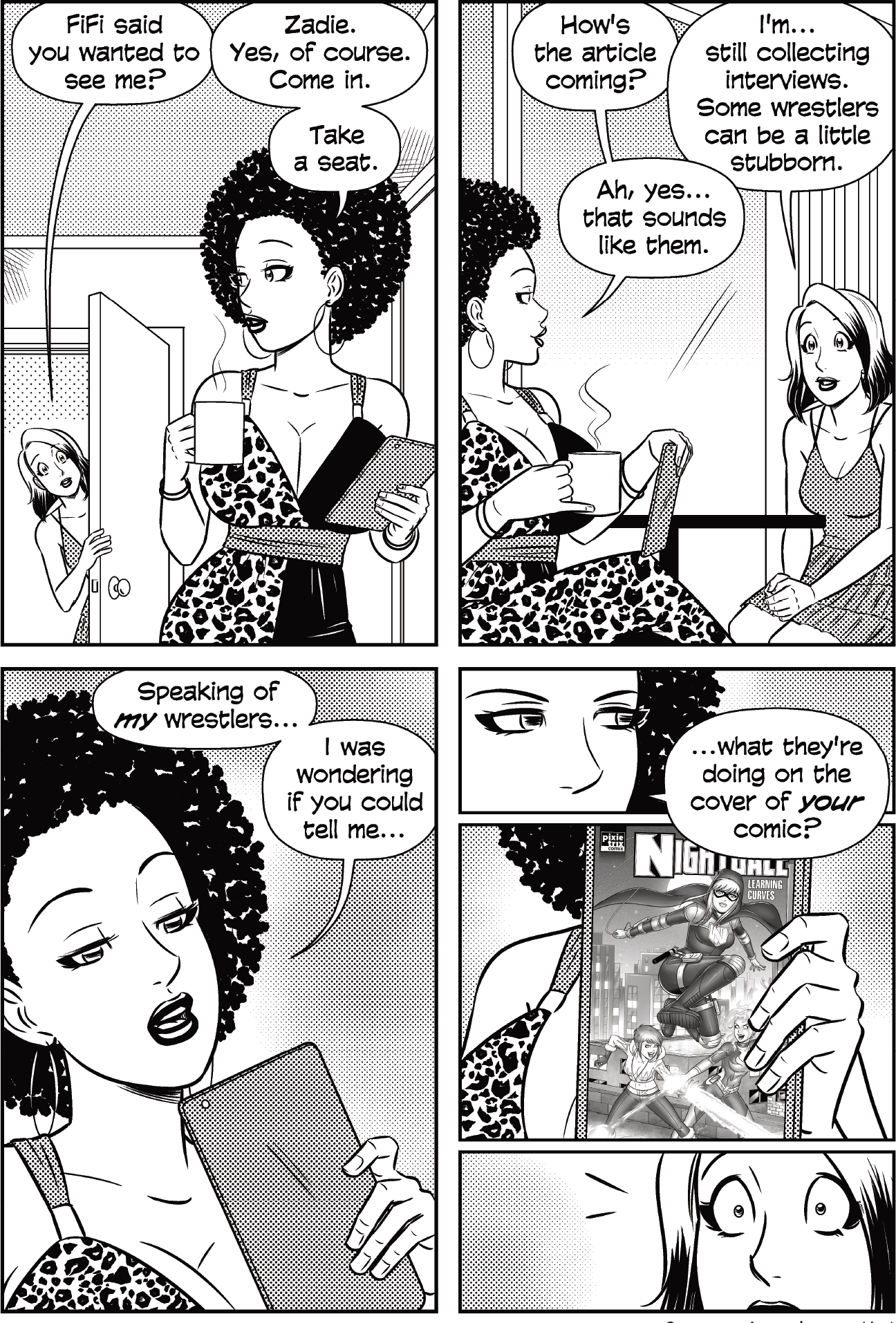
Finally, “The Big Two” is the name comics fans use for DC and Marvel, which have owned most of the comics market for most of the last half-century. Here, it also refers to tycoon GiGi and her trusted assistant FiFi, who run a billion-dollar wrestling brand and have nefarious plans involving Pixie Trix employees. These begin when they offer editor Zadie a freelance gig that seems too good to be true—and is.
(And yes, you could say that each of them is in possession of another kind of “big two.” Creator and artist Gisèle Lagacé has never been exactly shy about décolletage.)
More of these for Volume 4 tomorrow!