Subverted Rhyme
Spoilers for K-Pop Demon Hunters follow!

Fill in the blank:
’Cause I’m your lady
And you are my man
Whenever you reach for me
I’ll do all that I can
We're heading for something
Somewhere I’ve never been
Sometimes I am frightened, but I’m ready to learn
Of the power ____
If you’ve heard this Celine Dion standard (“The Power of Love”), originally by Jennifer Rush, your answer’s probably “of love.” My answer was always “within.”
Did Rush think we weren’t going to get that this was a love song? Most pop songs are! And the first two lines make it pretty clear! This isn’t a rhymey song overall, but why set up a chorus with two rhymed lines and then two unrhymed lines? Isn’t “aabc” an anticlimax? It’s not like there aren’t plenty of options to rhyme with been! 😤
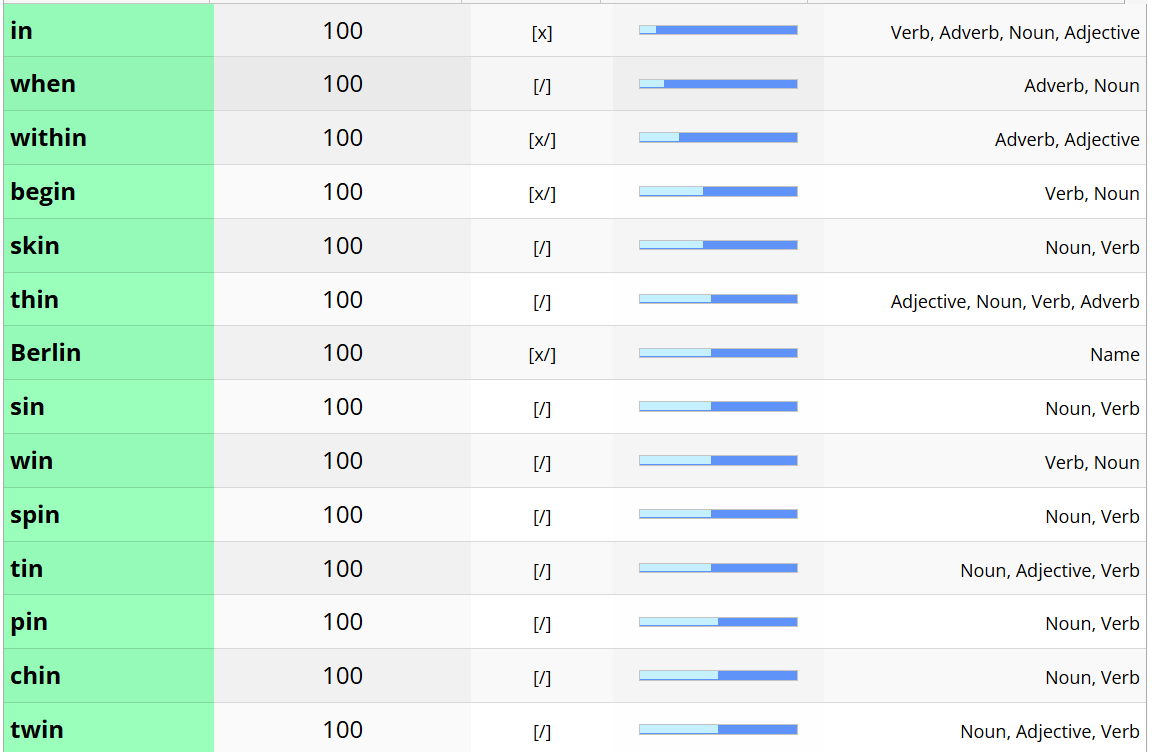
The lyrical choice there looks like a mistake to me. Usually, when the audience expects you to rhyme, you should deliver. But there are exceptions.
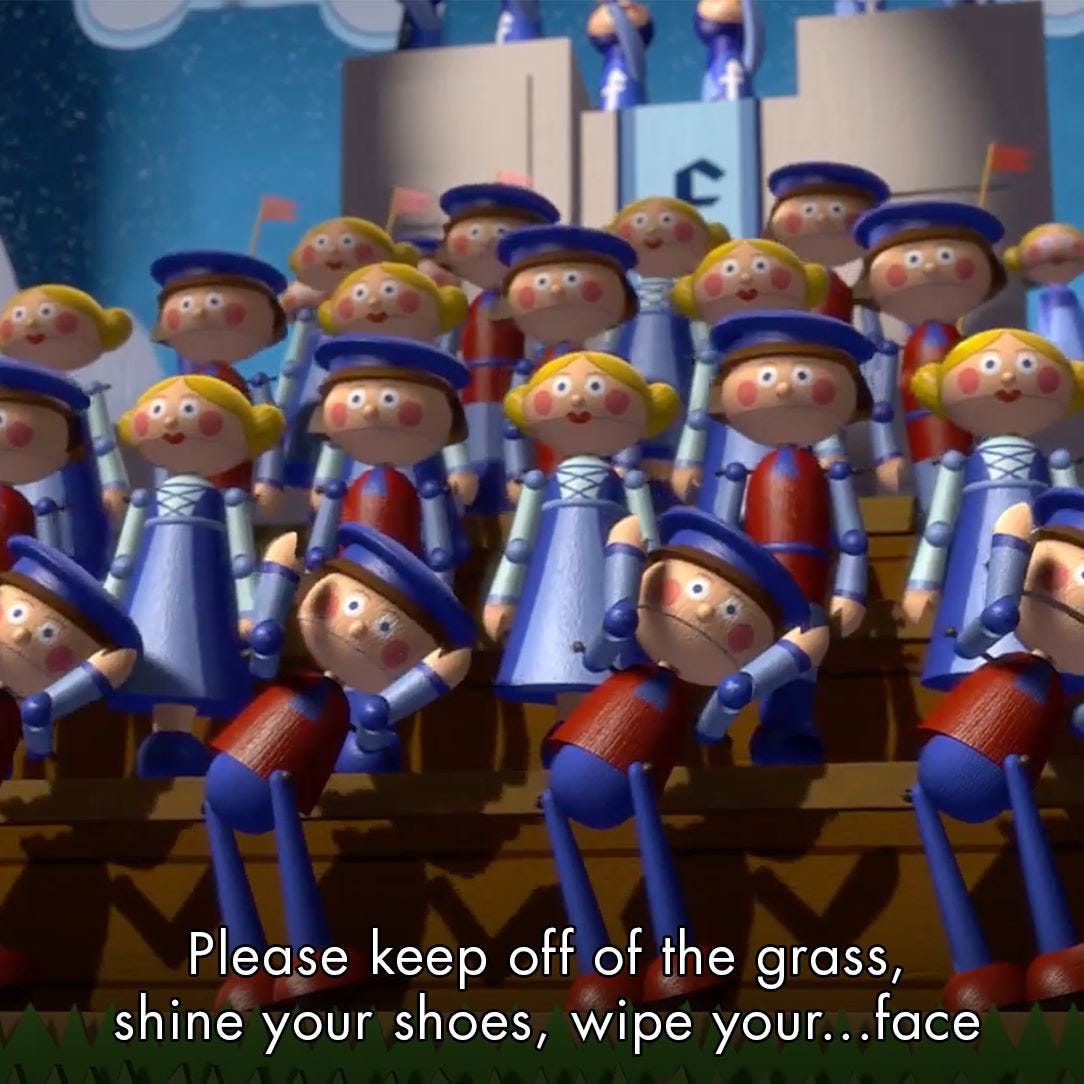
Subverted rhyme means the listener or reader knows what rhyme should go at the end of a line but has to fill it in themself, either because the line trails off or because it offers a substitute. Benny Bell’s “Shaving Cream” uses subverted rhymes to “swear without swearing”:
I have a sad story to tell you.
It may hurt your feelings a bit.
Last night, when I walked in my bathroom,
I stepped in a big pile of shaving cream,
Be nice and clean,
Shave everyday and you'll always look keen.
Shrek toyed with a similar effect:
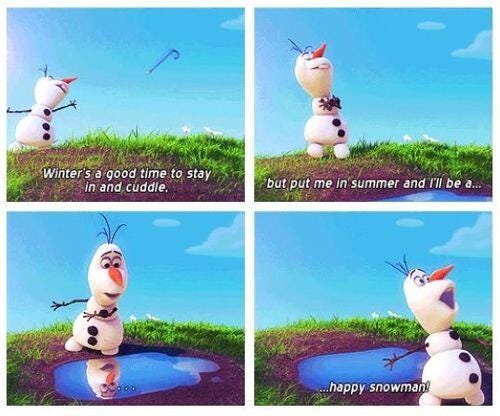
A non-sweary example found its way into Frozen:
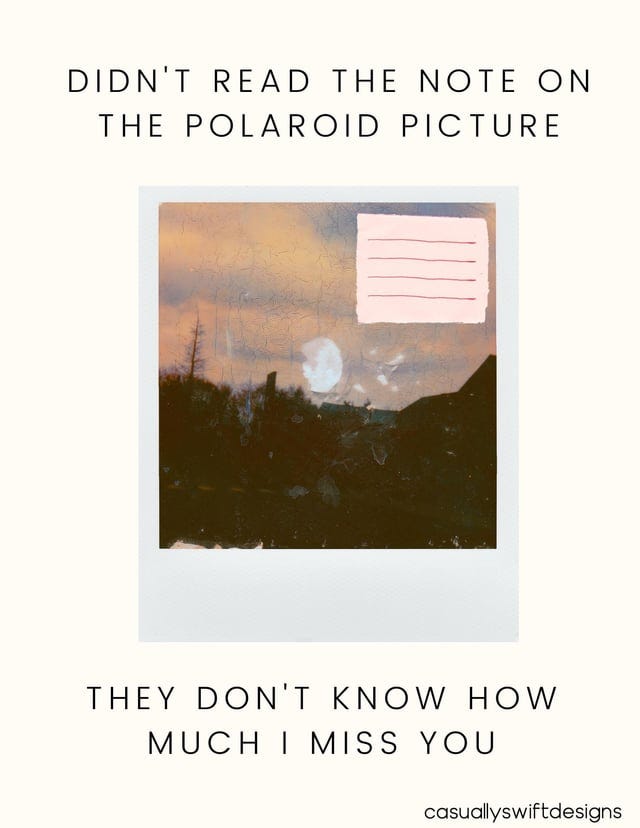
Non-rhymes can inspire fan theories. Taylor Swift’s “The Very First Night” rhymes a couple of lines with “miss you” that’d rhyme better with “miss her.”
’Cause they don't know about the night in the hotel
They weren't ridin' in the car when we both fell
Didn't read the note on the Polaroid picture
They don't know how much I miss you
The second line there evokes Thelma and Louise. Was this a song about a female lover, real or imagined? Fun to think about.
It’s this kind of theorizing I’ve brought to “Takedown” from K-Pop Demon Hunters. The chorus begins:
’Cause I see your real face, and it's ugly as sin
Time to put you in your place, ’cause you're rotten within
When your patterns start to show
It makes the hatrеd wanna grow outta my veins
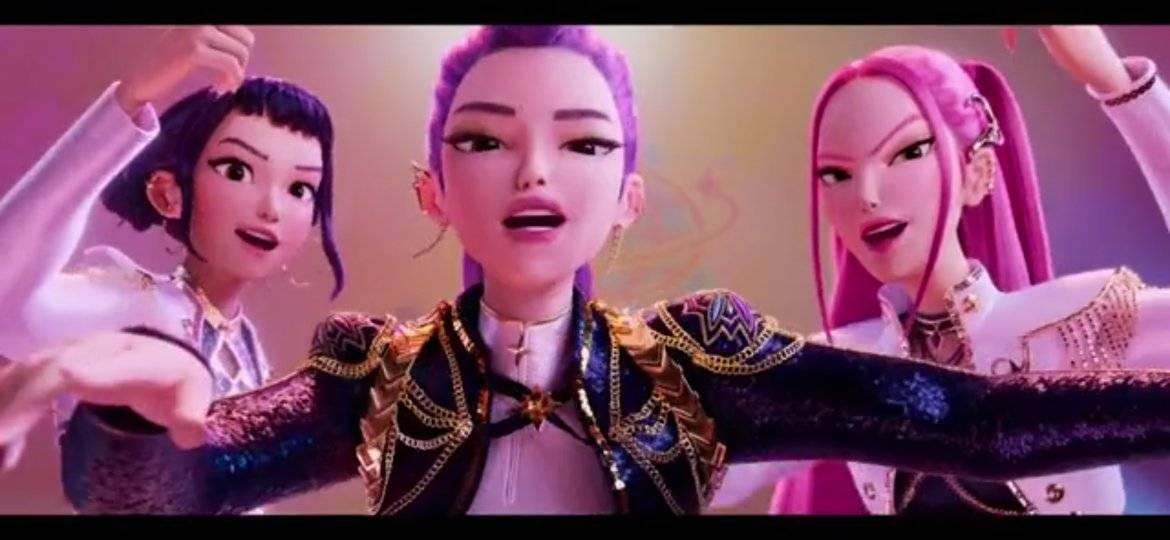
…Why veins? Why not skin?
These lyrics don’t feel like the missed opportunity that “The Power of Love” did. Skin would be a third rhyme, a bonus on top of sin and within. And the singers “sell” the lyric, giving veins a low, dragging emphasis that feels like a choice. But why choose no extra rhyme?
One reason is that the movie’s later “Your Idol” leans harder on a “sin”/”skin” choral rhyme:
I’m thе only one who’ll love your sins
Feel the way my voicе gets underneath your skin
And unlike every other song in the musical, “Takedown’s” lyrics are a source of conflict. Lead singer Rumi turns away from the knee-jerk hatred it expresses and even starts to rewrite the lyrics…
When your patterns start to show
I see a pain that lies below…
So maybe “Takedown” was always meant to feel a bit “rough.” It has a tension, a chaotic energy, an energy that turns against Rumi as the story nears its climax. Would that be lessened if the song rhymed more than it needed to? Often a good rhyme cries out to be spoken, but occasionally, rules are meant to be…subverted.
It's a Celine Dion cover of a Jennifer Rush song, so the missed rhyme wasn't really her choice.