Wicked Thoughts
Doesn't Boston slang already use the word "wicked" to mean "good"?

This 1995 book turned 2003 play turned 2024 movie series is a big, splashy spectacle, but in one sense, it’s all too small.
There’s no arguing with the songs’ power or the singer-actors’ talent. The movie’s primary energy source is the electric, conjoined performance of its two leads. Separately or together, Glinda and Elphaba drive the (ahem) lion’s share of the story.
People are going to interpret their relationship in different ways. Oz has always appealed to LGBTQs, some of whom dreamed of escaping “black-and-white” small towns and joining a flamboyant found family. Hence the term “friend of Dorothy.”
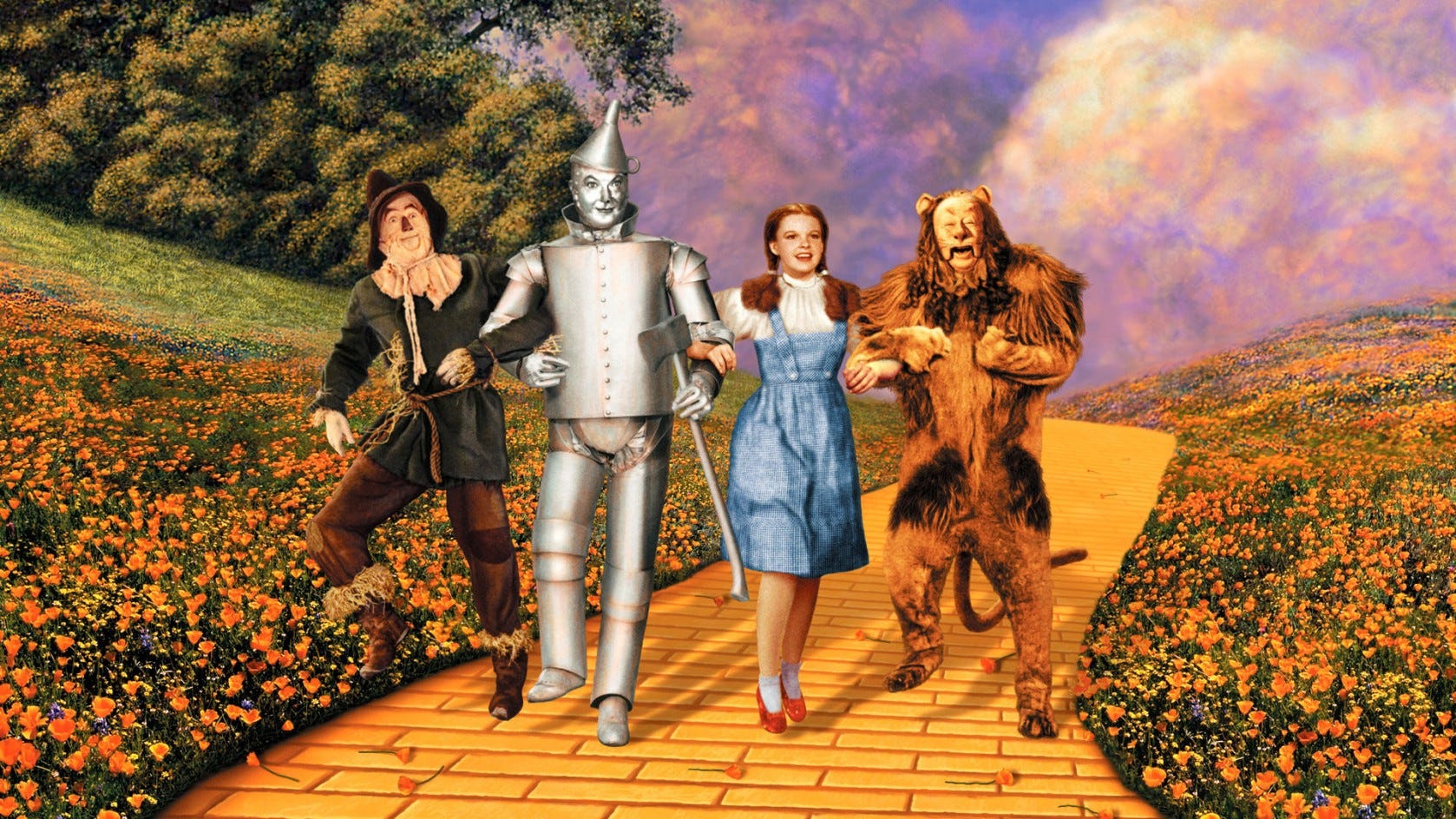
I won’t begrudge anyone who reads Glinda and Elphaba’s tale as a love story. I tend to see it as a friendship—but that might be personal, a response to what I don’t have. In my twenties, I didn’t have much romance in my life; now I’m happily married but miss the close friendships I had then.
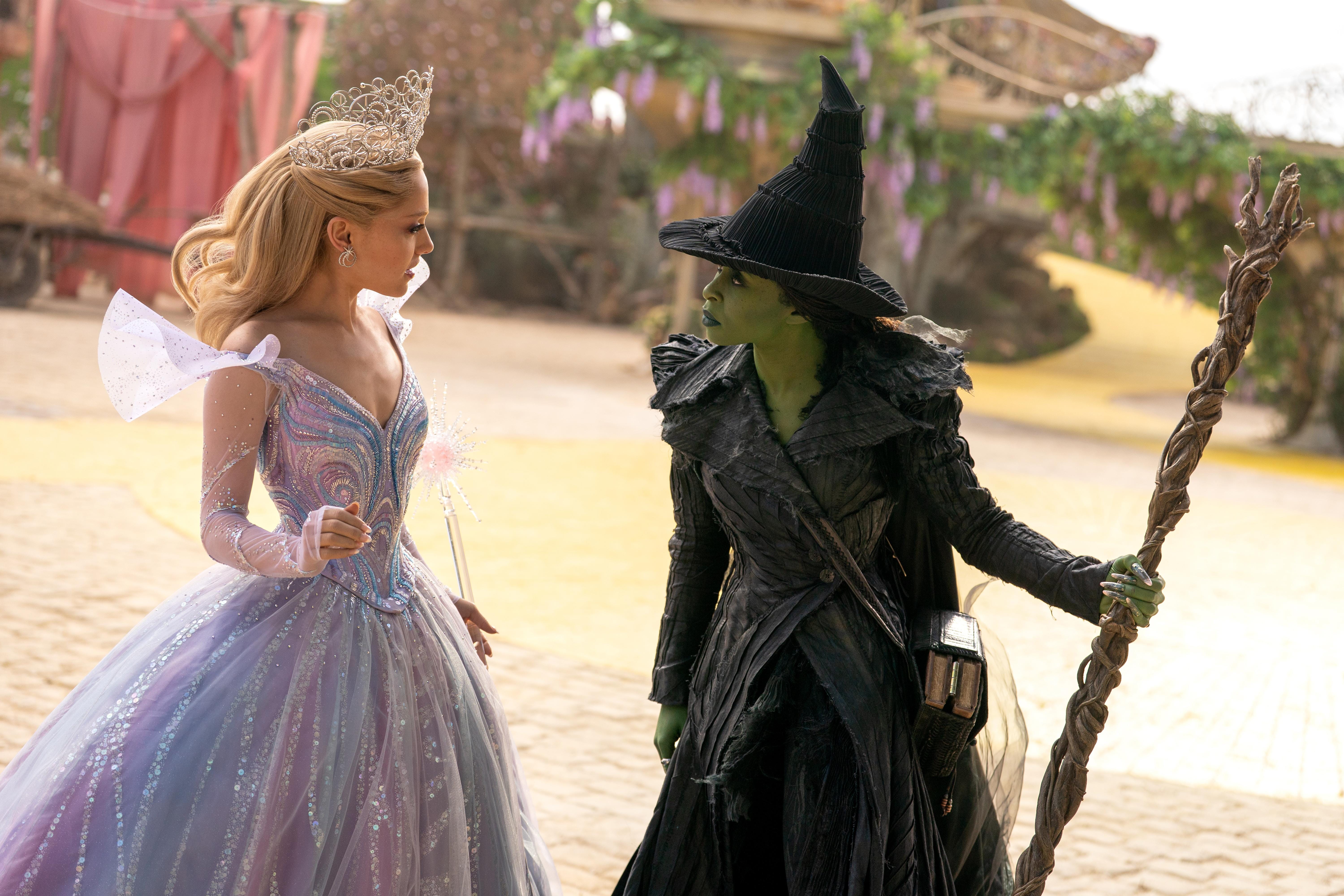
In any case, that relationship—veering back and forth from rivalry to intimacy, closeness to distance—keeps the story grounded in the personal, where it shines. It’s in the larger sphere where Wicked struggles, despite the chilling resonance of its depictions of fascist dictatorship.
When we use our eyes, most of us get different visual inputs, one from each eyeball, and perceive them as one picture. Watching Wicked is like seeing the old Oz in your left eye and dystopian oppression in your right. For most of the first movie, it’s not hard to resolve these two images into one, but that exercise gets harder the more we learn about the Wicked Wizard.
The Wizard of Oz—book and 1939 movie—encourages the audience to buy the Wizard’s self-assessment that he’s not a bad man, just a bad wizard. A con artist, yes, but one Dorothy could befriend, with no attachment to power, just fear of being found out. Once “outed,” he helps Dorothy and her friends and is glad to leave Oz with her.
The Wicked films tear this characterization apart. Though his advisor Mombi is the nastier of the two, the Wizard signs off on Naziesque discrimination, political imprisonment, and assassination. Rather than seeking a way out, he’s clinging to power by any means necessary. And that’s before we—and he—learn he’s also Elphaba’s deadbeat dad.
After this revelation, Glinda shames the Wizard into leaving Oz with Dorothy—or may be threatening him with scandal. In the book, it’s clear he’s just leaving to save his neck from an incoming coup.
Just to make sure we don’t miss the point, the Wizard starts, “I’m not a bad man—” and the outraged Elphaba shouts, “Yes, you are!”
(Jeff Goldblum voice:) “So, uh, yeah, that seems pretty, uhm, definitive?”
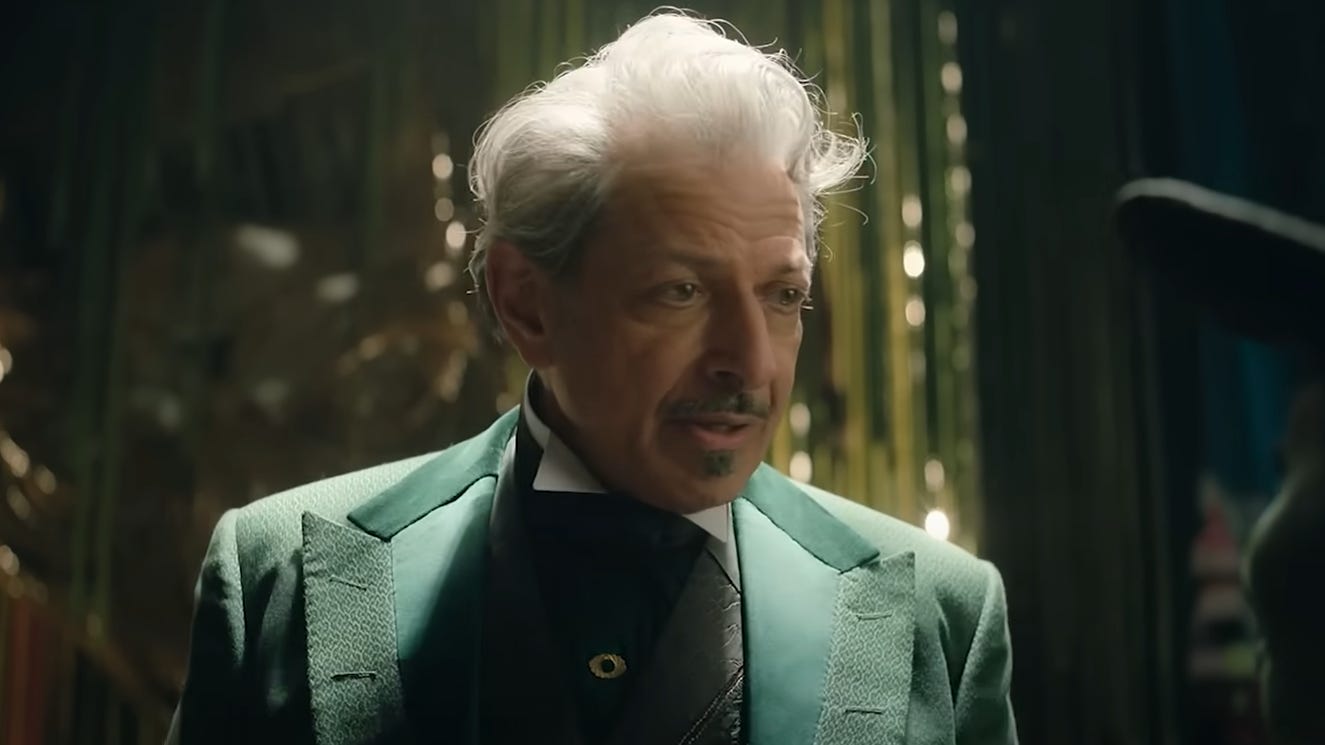
Villainizing the Wizard wasn’t necessary for the plot: he could’ve been Mombi’s puppet instead of her knowing enabler. Mombi has real magic, doesn’t need a disguise, and is a villain from later Oz works like Return to Oz. How hard would it have been for her to keep him misinformed about the dark side of “his” kingdom? A statement could be made about how incompetence can be almost as bad as malice, if it leaves a void for malice to fill.
But that’d mean reducing the Wizard’s screentime, and for better or worse, the Wicked films incorporate as much “Oz” as they can. This is an origin story not only for Glinda and the Wicked Witch of the West, but also the winged monkeys, the Wicked Witch of the East, the Yellow Brick Road, Munchkin Country, the Scarecrow, the Tin Woodsman, the Cowardly Lion, and even the freakin’ tornado that brought Dorothy to Oz. Random weather patterns? Don’t be ridiculous! If there’d been time, the movies might’ve explained the poppy field and the genetic quirk that makes munchkins small.
Almost none of these origins resolve into a coherent picture with the source material, if you think about them. Is Mombi so powerful she knows the lands outside of Oz and can create tornadoes in other nations, and if so, aren’t there easier ways for targeted cyclones to solve her problems? Wouldn’t the Scarecrow, who turns out to still love Elphaba, do more to protest the hit on her? Why does the Tin Woodsman blame Elphaba for his condition and not her untrustworthy sister, who enslaved him, just because she insists Elphaba did it? Why would the Cowardly Lion, of all “people,” reverse course after fleeing Oz and go back to the capital city of his persecution?
Beginning writers are told, “You’re allowed one extraordinary event, but only one: everything else should logically result from that.” For most stories, that’s true. But there’s another kind of “story universe” where it’s not—Wonderland, Greek mythology, the Marvel Cinematic Universe, classic Oz. These worlds have some cause and effect, but also a feeling that anything can happen, that another strange character or place is just around the corner. A diversity of imagination. Which echoes the diversity of humanity.
Dorothy meets a talking scarecrow, tin man, and cowardly lion. Those figures—like the LGBTQ people with whom they resonate—don’t need to explain why they are. In The Wizard of Oz, they simply are. That’s part of the beauty of the setting. And for all the other beauties the Wicked films offer, this is one they don’t seem to see.