The Emotions
Let's try and be rational about this.

Happy. Sad. Angry.
These are the first emotions that most children learn. And a lot of the simple literature assumes happiness is the default. Even when we don’t accompany a text with a smiley, that assumption persists in the writing we read, unless the subject is notably saddening or enraging, or other emotions are part of the account. I feel like most of the posts I write here should be read with a light smile on your face. Exploring new avenues of knowledge is fun, right?
A while back, I wrote about the attempt to classify emotions, and concluded it was a difficult, perhaps impossible exercise to get them all. Delighted confusion, as when solving a challenging puzzle? Weltschmerz? Clinging to pessimism in the face of good news? The task seems like the exercise of classifying different types of stories: there are models that try to boil everything down to twelve major types, or seven, or three, but they always seem to miss something.
Plutchik’s Wheel of Emotions is an interesting attempt, but the flaws become visible before too long.
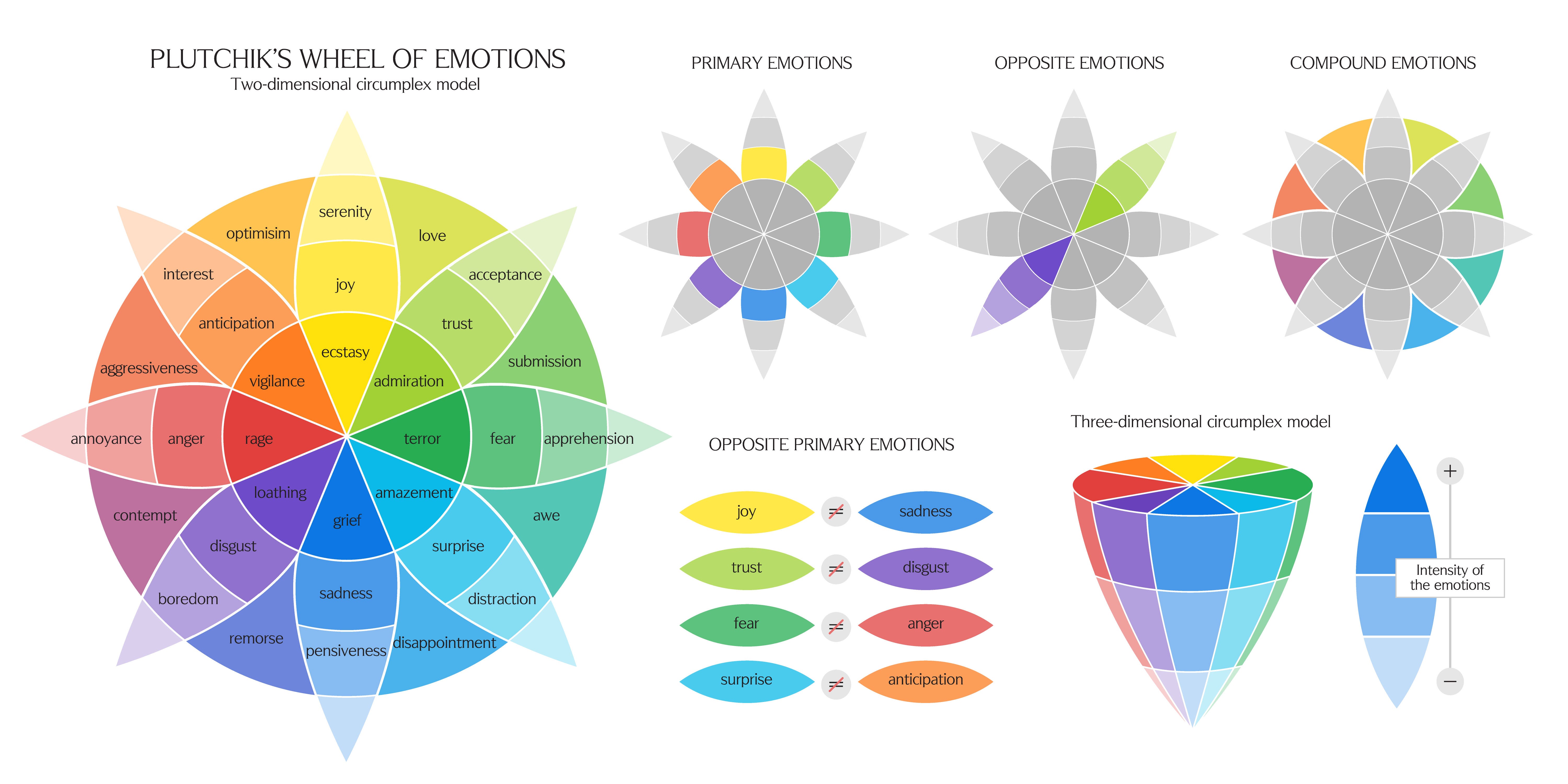
The pairs of “opposite primary emotions” in the model don’t and can’t combine in the chart, and in a couple of cases, that seems sensible at first. Sadness is the opposite of happiness, right? Paolo Pasco’s latest Atlantic puzzle would agree with that.
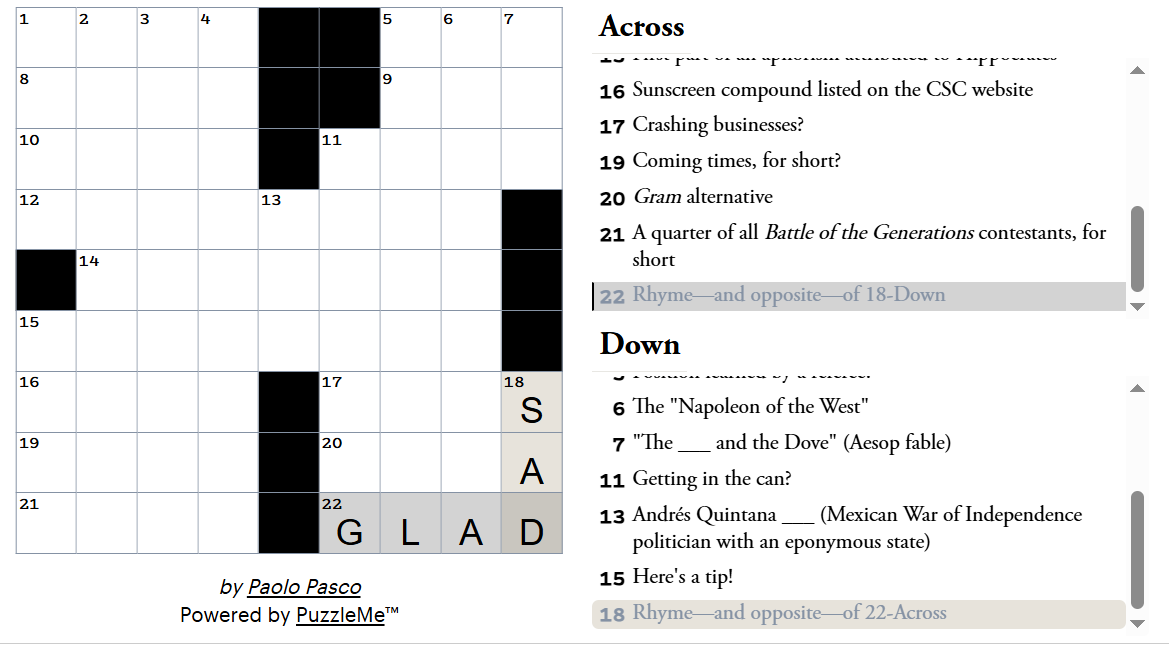
But we see sad smiles all the time, and those smiles aren’t lies. They might come from remembering the good times after a breakup or the death of a loved one. They might come from listening to a well-done sad song. The other alleged “opposites” can likewise combine: vigilance and amazement together turn into fascination. Even loathing and admiration, the most seemingly opposite of the pairs, can coexist. There are people I loathe as human beings but still admire the skill with which they accomplish their goals.
As for anger and fear, it sometimes seems like we see those two together more often than we see them apart.
The PAD model tracks emotions along three categories—how much pleasure does the emotion give us, how much arousal does it give, and how much does it move one toward dominance? Collectively, these terms might seem to have a sexual connotation. But in practice, their usage is more abstract.Dominance doesn't mean dominating others, for instance; it just means taking control of your situation and your immediate environment.
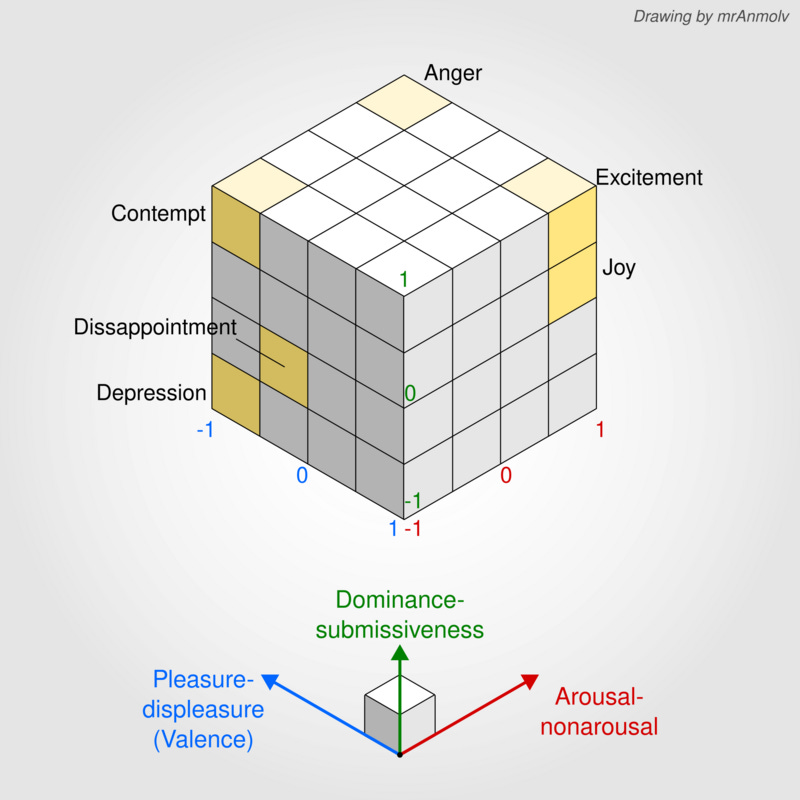
This model seems more promising when it comes to the range of emotions one can express. Avatar designs have used it to increase their emotional “range.”
But to some degree, it has the same problem of contrast that Plutchik's wheel has. A Zen master is in one respect quite in control of himself and his environment, but in another sense he is submissive to it. Would he end up on the same place in the chart as a benign slob? It certainly seems like they could have similar levels of arousal and pleasure in their different approaches to life.
Scott McCloud's system of expressions, which I showcased in that earlier piece, allows more contrasting impulses. But McCloud also admits the challenges in fully mapping emotional reactions and how they interact with the physical world. Is pain an emotion?
![[pg007.jpg]](https://substackcdn.com/image/fetch/$s_!3wHP!,f_auto,q_auto:good,fl_progressive:steep/https%3A%2F%2Fsubstack-post-media.s3.amazonaws.com%2Fpublic%2Fimages%2F388827be-75b2-4985-99c3-ced23f4f0a27_800x1200.jpeg "[pg007.jpg]")
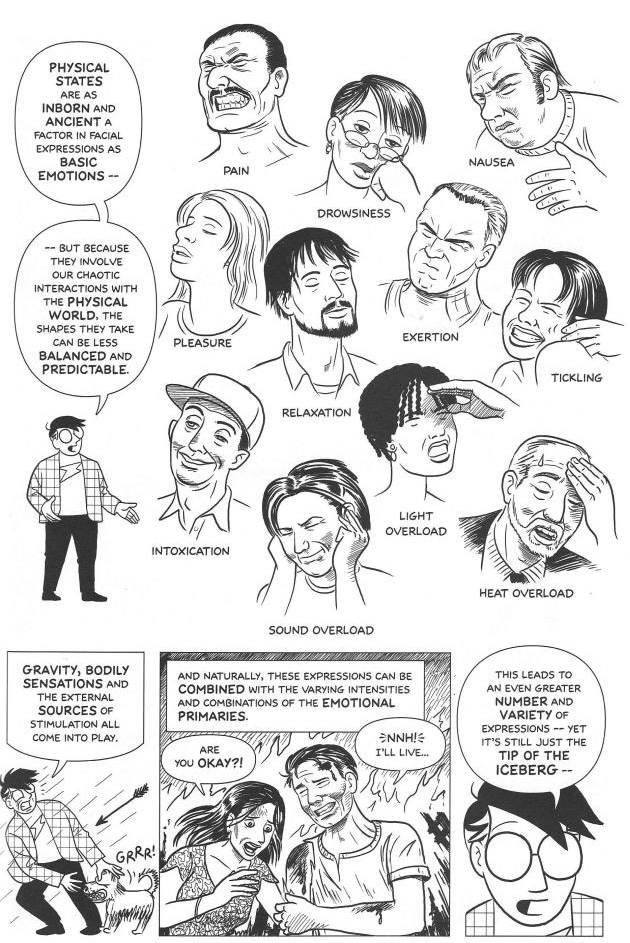
Truth to tell, when I started this piece, I thought the first two systems above might represent an orderly encyclopedia of emotions—each distinct, eliminating relative redundancies like anger and ire. Now I have to again conclude that human emotions are too complex to master like that. That fills me with disappointment, sure. But also a certain wistful awe.
Tomorrow, I might take a day off—I’m a little under the weather. Either then or Monday, I’ll have a quick follow-up to this piece from a more practical perspective. Until then!